
History, Ceremony, and Competition at Berkeley’s Indigenous Peoples Day Pow Wow
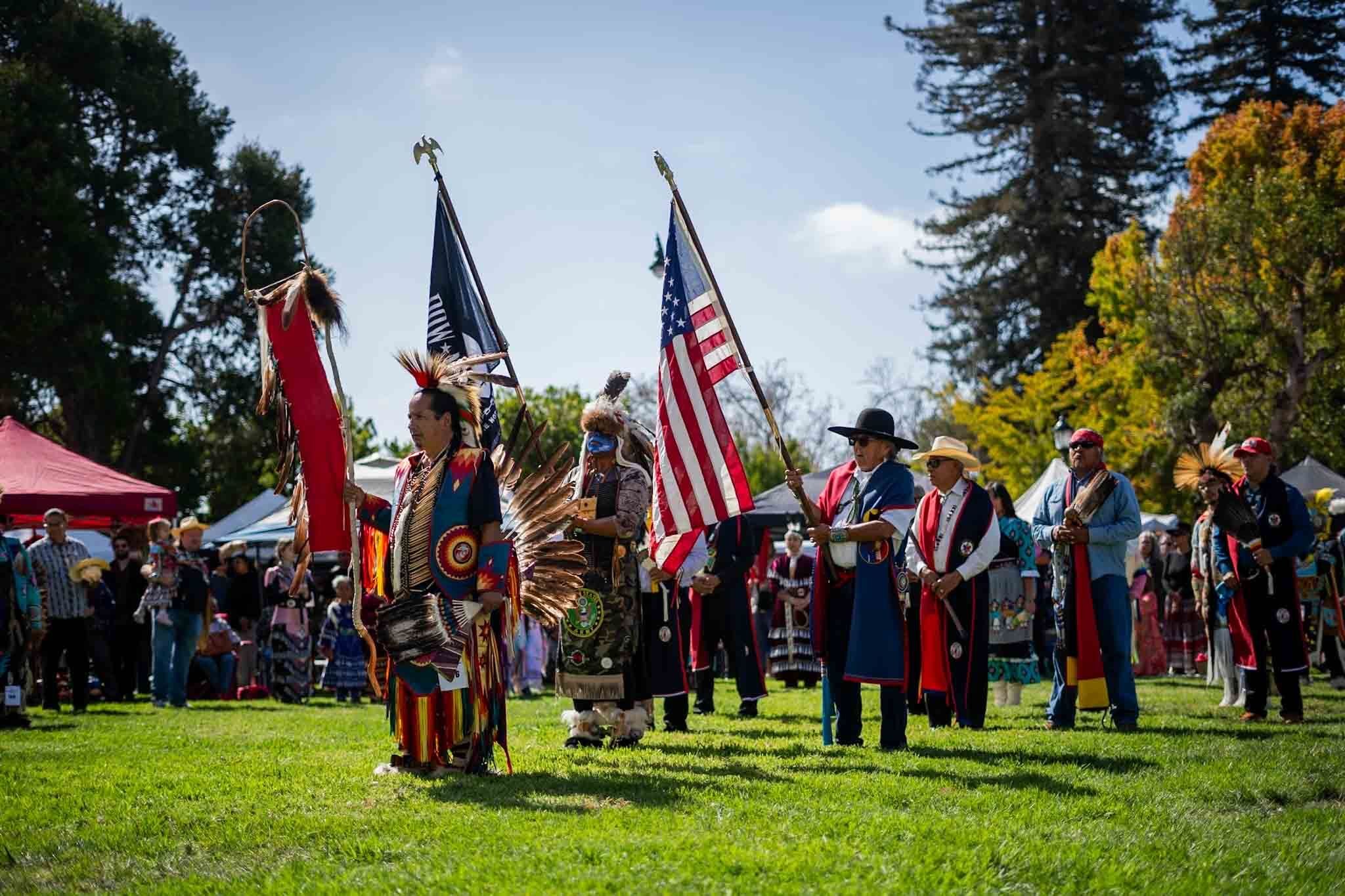
The grand entry
Photo by Noah Mendieta
On Saturday Oct. 10th, the City of Berkeley hosted its 34th annual Pow Wow and Indian Market in MLK Civic Center Park. Serving as a celebration of Indigenous People’s Day, the event was rich with history, ceremony and competition.
At noon, Mayor Adena Ishii, alongside city councilmember Igor Tregub, made the annual proclamation of the holiday. This would mark the first year in the event's history that the mayor has made the proclamation at the event itself.
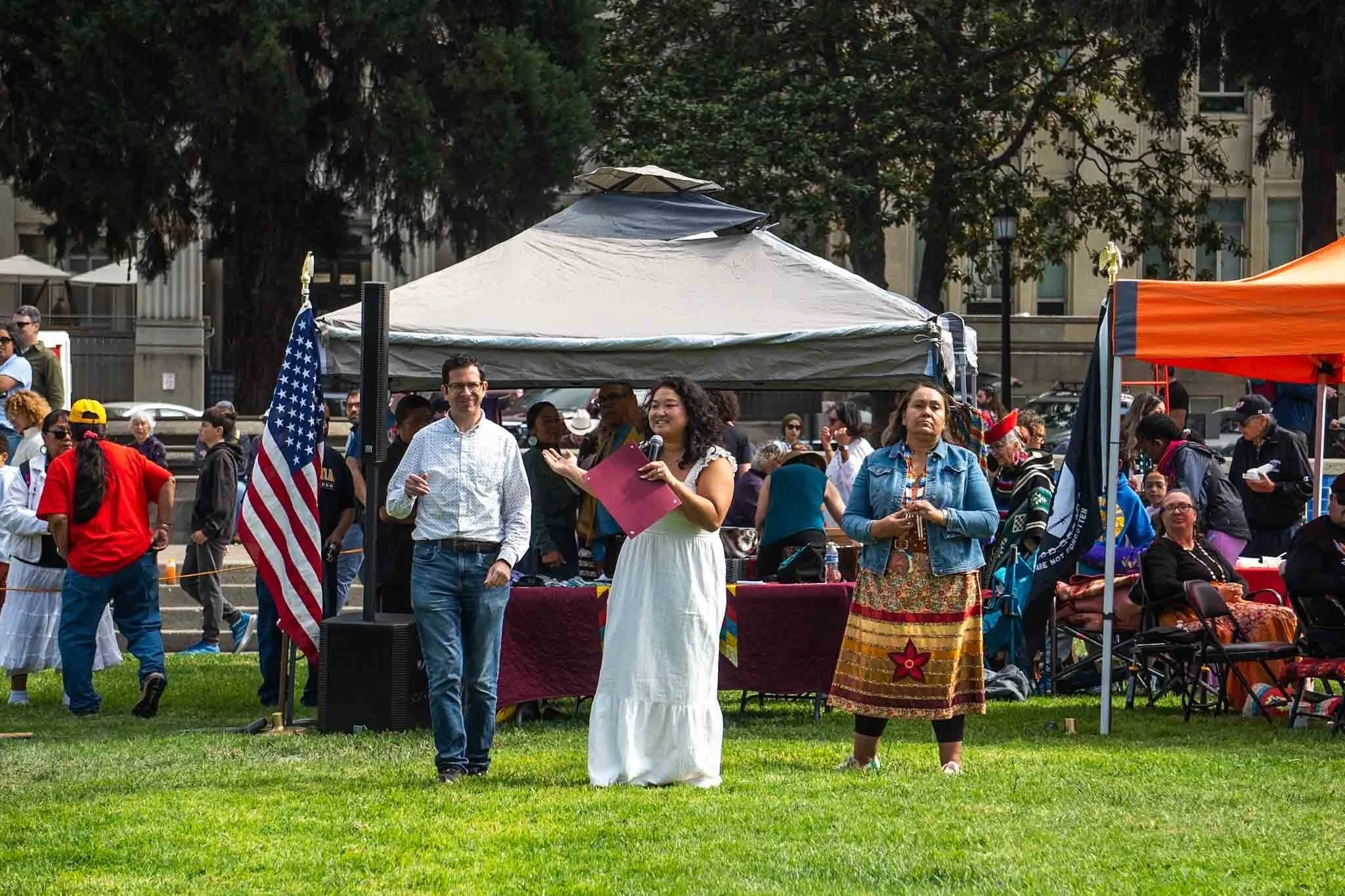
Mayor Adena Ishii and Councilmember Igor Tregub announce this year’s proclamation.
Photo by Noah Mendieta
Before commencing with the ceremony and dance competitions, emcees Randy Pico and Aurora Mamea introduced the history of the event.
Berkeley was the first city in the U.S. to establish Columbus Day as Indigenous People’s Day in 1992. The Pow Wow serves as a means to honor Indigenous history in the United States and recognize the ongoing struggles of their communities today.
“We weren’t supposed to be here today, but we’re here,” Mamea said, speaking on the topic of displacement in the United States.
The preservation of this event is upheld by the Indigenous People's Day Committee, who works year-round to bring tribes, vendors and the city together for this event. They offered info packets and answered questions referring to the history and proper Pow Wow etiquette.
This was Marie Hernandez’s first time coordinating the event for the committee. She’s worked closely with the Indigenous community in the Bay and has been a part of the committee for 4 years.
Despite the low population of Indigenous people in the Bay, she explained that there are around 200 different local tribes. These tribes frequently support each other through nonprofits like the Native American Health Center and the Internal Friendship House.
Through these organizations, Hernandez is able to make deeper connections for the event.
“The thing about Indigenous People is that our people are the most important thing to us, so we keep staying together,” Hernandez said, “We know we're stronger together.”
After the introduction, the dances began. Two singing groups, All Nations Singers and So Ex Style, were invited to perform for the competitions.
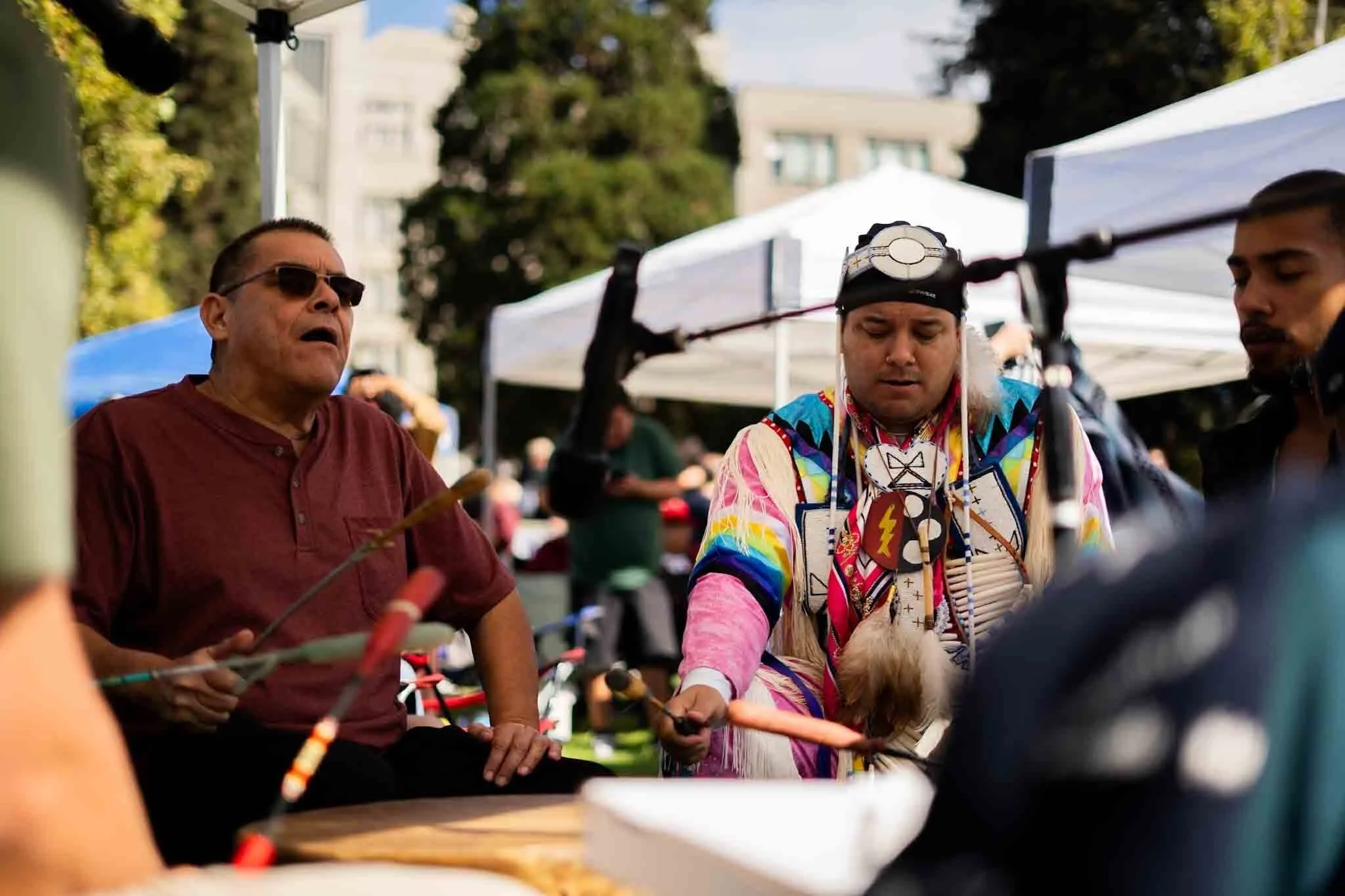
So Ex Style Singers perform Southern traditional songs.
Photo by Noah Mendieta
The role of dancing is held very sacred to each dancer. Many dance their whole lives at these celebrations in honor of their families.
One dancer, Shamir Kali Griffin, has been grass dancing for about 20 years. However, he hadn’t been to Berkeley’s Pow Wow in over a decade. The last time he competed in Berkeley was a year after beating lung cancer in 2012.
“This is the Pow Wow where I started dancing all over again after losing that part of my body,” Griffin said.
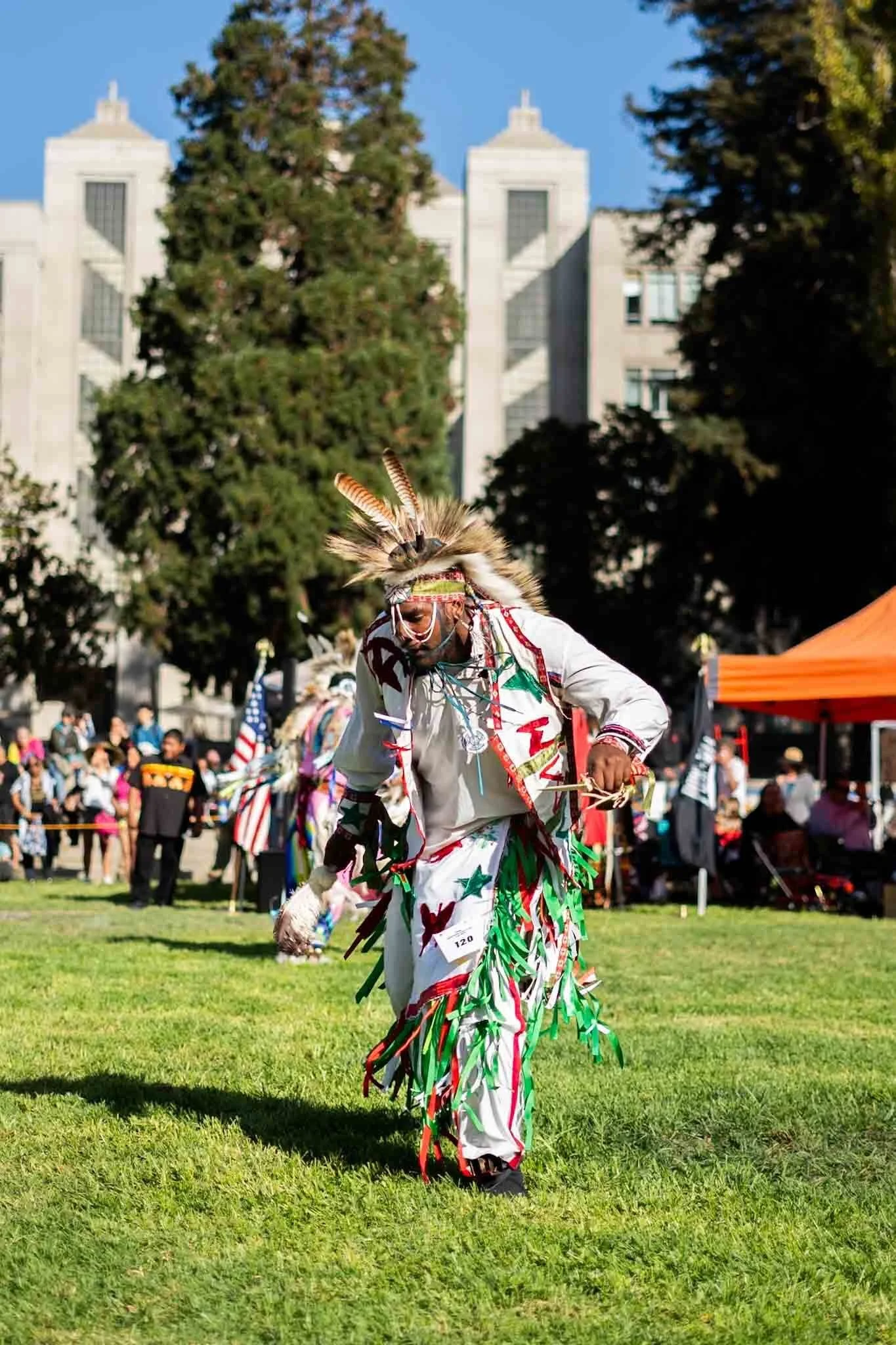
Shamir Kali Griffin in traditional grass dance.
Photo by Noah Mendieta
His dedication to this craft goes beyond dancing. He explained that mental fortitude and health is an important aspect of competing. Returning to the competition serves as a reminder for Griffin, and dancers alike, to reconnect with their community.
This year's Pow Wow upheld the tradition of coming together as a community and supporting one another.