
What Telegraph taught Sunspot Jonz about making your own creative world
For UC Berkeley students now, Telegraph Avenue can feel less like a creative frontier than a corridor between class, coffee and home. Three decades ago, it functioned as something else for a loose network of Bay Area rappers: a record store, distribution system, meeting ground and public test of nerve.
Sunspot Jonz would arrive with homemade Mystik Journeymen cassettes and try to turn strangers into listeners. Like many creatives, Sunspot was tasked to explain a world that did not yet have institutional recognition, a label budget or an algorithm prepared to recommend it.
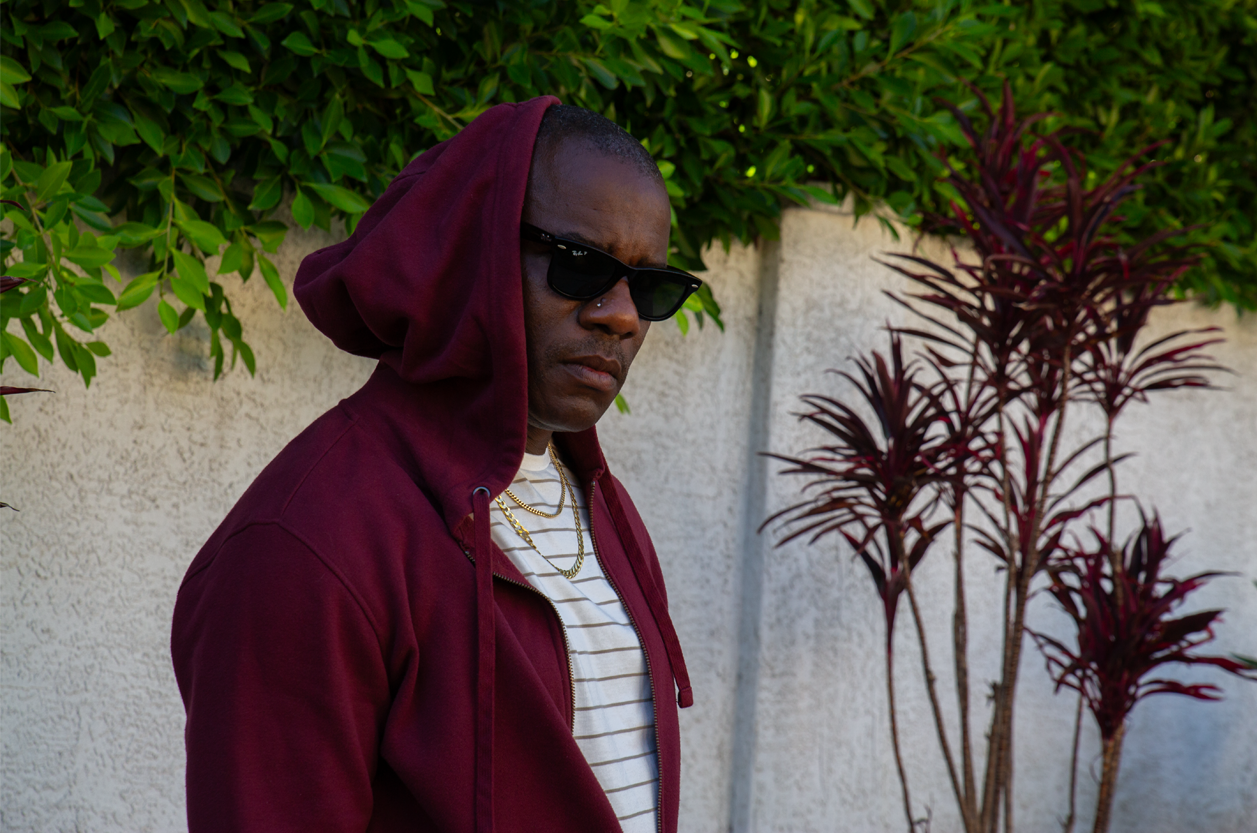
Sunspot Jonz, whose direct exchanges with listeners on Telegraph Avenue helped turn handmade music into a community.
Courtesy of Sunspot Jonz
“Telegraph just became the place I loved to be,” Jonz said in an interview with The Berkeley Pulse. UC Berkeley students came from around the country and the world, and many were receptive to the underground music he and his friends were building. “Telegraph kind of was the building base for everything,” he said.
His story matters to young creators because its lesson is harder than the slogan “do it yourself.” Jonz was not the loner musician or creator. He helped create systems through which other people could publish, perform, tour and belong. His independence was collective by design.
Jonz had been preparing for that work since Berkeley High. As a teenager, he produced an underground newspaper criticizing administrators and school life. He spent hours enlarging images, arranging pages and making copies, sometimes testing the patience of the businesses whose equipment he occupied.
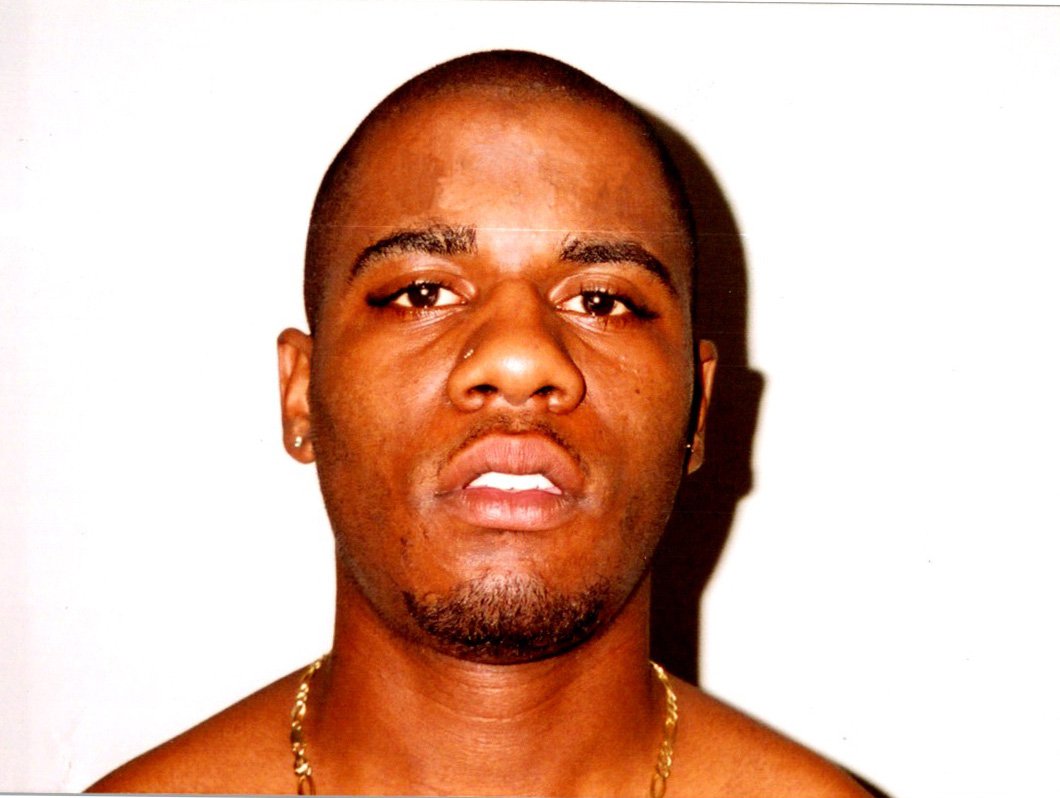
A young Corey “Sunspot Jonz” Johnson, before Mystik Journeymen and Living Legends carried his independent practice far beyond Berkeley.
Courtesy of Sunspot Jonz
That experience became a blueprint for Unsigned & Hella Broke, his xeroxed publication about artists excluded from mainstream hip-hop magazines. The title was funny and blunt, but the ambition behind it was expansive.

The second issue of Unsigned & Hella Broke put excluded West Coast artists on its own handmade cover.
Courtesy of Sunspot Jonz
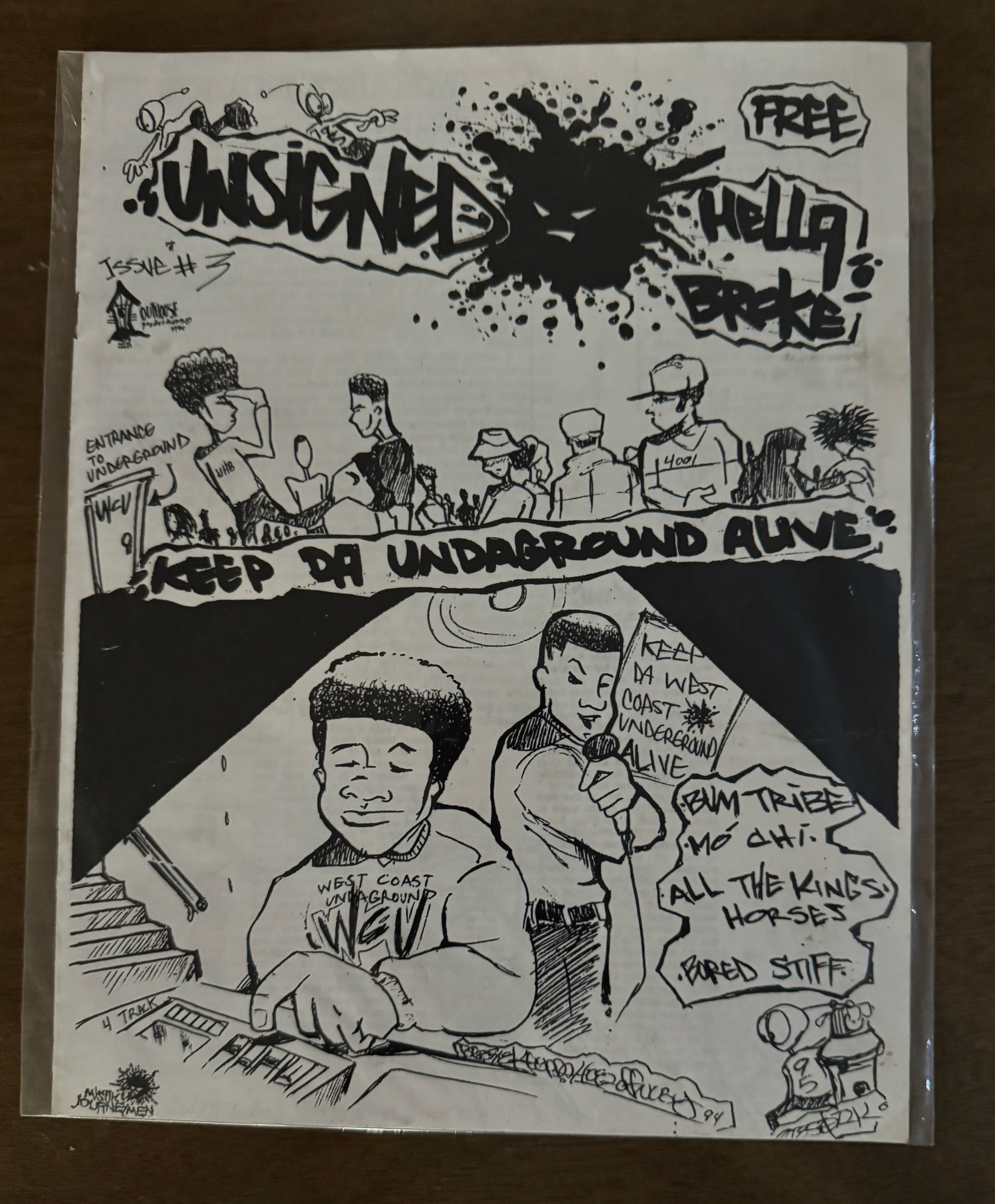
Unsigned & Hella Broke issue three continued the zine’s call to keep the underground alive.
Courtesy of Sunspot Jonz
“We need our own voice,” Jonz said. “We didn’t even sit around and wait for anybody to tell us we are who we are.” If national publications would cover only a few Bay Area artists, he reasoned, local artists could document one another. “Unsigned and Hella Broke was also Unsigned and Hella Dope,” he said. “We can make our own lane.”
The never ‘quit approach’ turned scarcity into circulation. Artists used four-track equipment, duplicated tapes, assembled covers and sold music face-to-face along Telegraph and outside shows. KQED’s 2025 history of the Unsigned and Hella Broke era places Mystik Journeymen among a network that included Fundamentals, Kirby Dominant, Queen Nefra and Hobo Junction. In the streets of Oakland and Berkeley, decades before today’s consulting clubs on Sproul, Jonz and his community of friends and family built a unified culture — encountering, challenging and supporting one another into their highest potentials.
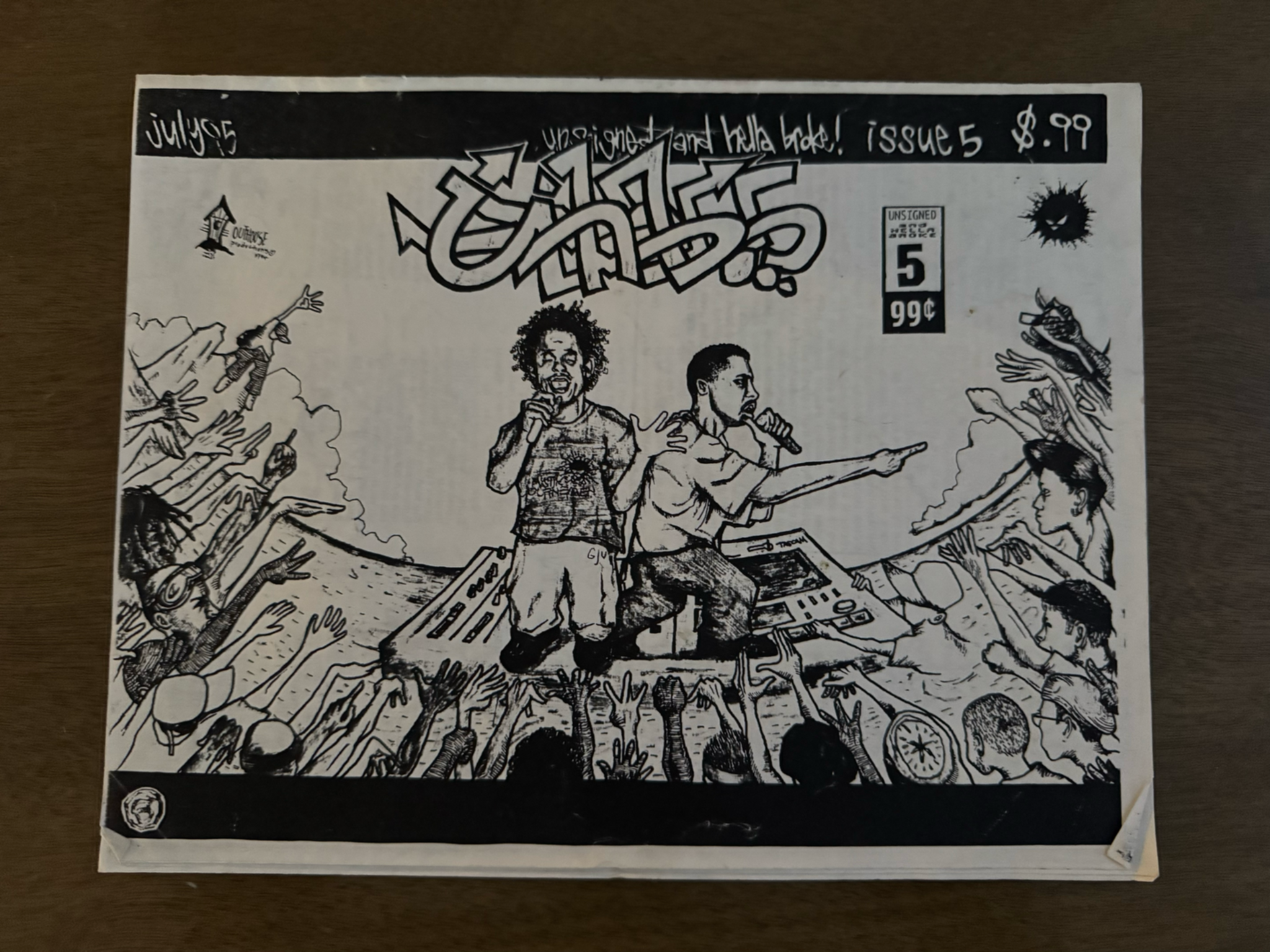
Issue five of Unsigned & Hella Broke depicts artists performing from a handmade stage surrounded by listeners.
Courtesy of Sunspot Jonz
Jon Jordan, who met Jonz through mutual friends around 1990 or 1991, remembers Telegraph as the place Oakland friends went for records, clothes, pizza and one another. He described Unsigned & Hella Broke as a folded, photocopied dispatch filled with local demo reviews, graffiti, scene news, comedy and rumor.
“Corey has always been about organizing people so that people can maximize their own potential, and everybody has a good time,” Jordan said.
Kirby Dominant experienced both sides of the Berkeley-Oakland connection. He attended UC Berkeley while pursuing music, which meant his creative life competed with midterms and a future not fully dependent on rap. He remembered Jonz and his peers living the artist’s life every day —recording, promoting and surviving through the work.
Dominant was never treated as an outsider to their momentum. Jonz put him on records, included him on bills and brought him on tour.
“He’s still a beacon for independence in hip-hop, and doing it yourself, because he’s still doing it,” Dominant said. Jonz’s recurring instruction, he remembered, was simple: “Break that fear.”
Fear, however, was not abstract for Jonz. He said he was adopted at four and spent much of his youth moving through foster homes and state custody. He recalled sleeping in cars, closets and behind a laundry-room dryer because it was warm. After leaving college and returning to the Bay Area, he made an unreasonable decision: he would try to build a life from his imagination.
“I came back and I just decided that no matter what, I was just going to make something happen off of these dreams,” he said.
That decision helps explain the intensity of the early movement. Selling a tape could determine whether he ate lunch or had bus fare home. Yet hardship alone does not explain what he built. Jonz and his collaborators translated pressure into gathering spaces. Their warehouse parties and Broke Ass Summer Jam offered alternatives to expensive commercial concerts. Admission at early shows could be a few dollars and a packet of instant ramen.
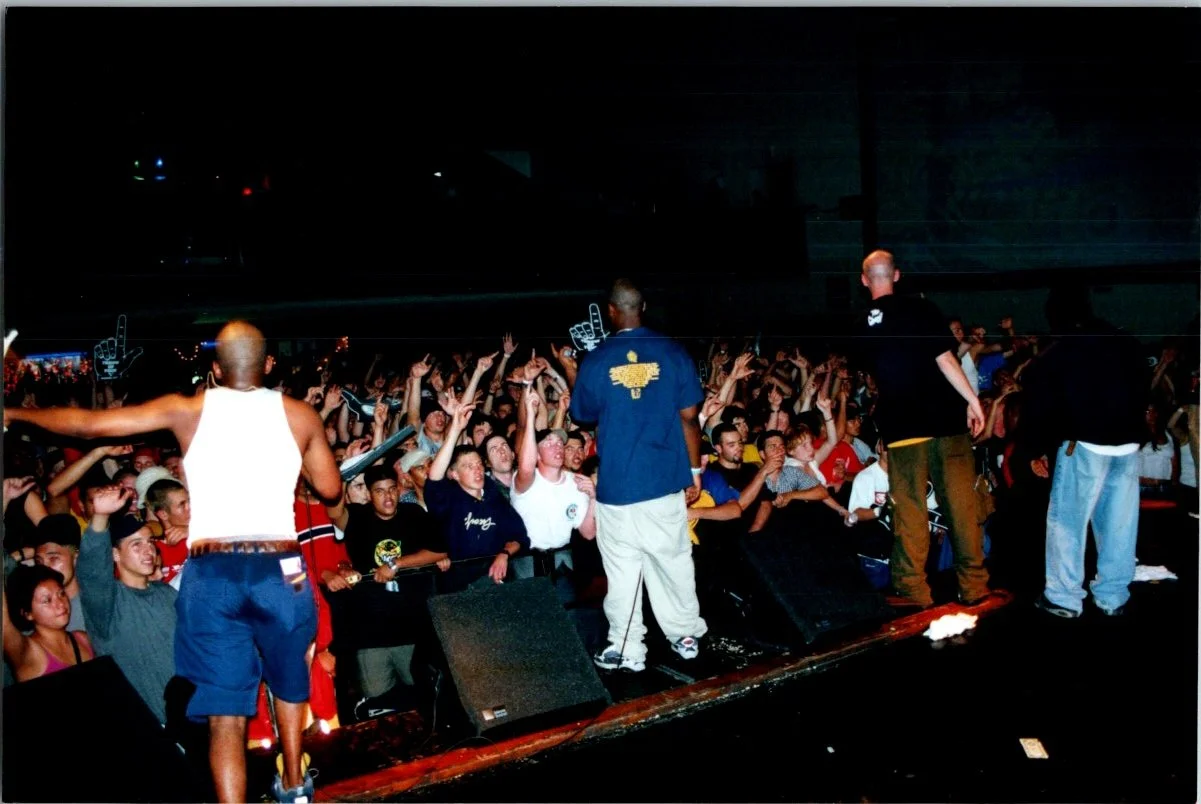
A packed Broke Ass Summer Jam shows the audience and artists sharing the same independent space.
Courtesy of Sunspot Jonz
Those events were designed as places where young people could experiment without the violence Jonz associated with other parties. Music became a form of social architecture. Much like those in the competitive, oversaturated market of talent and potential at UC Berkeley, artists in this contingent refused to wait for discovery but constructed the audience, venue and mythology around themselves.
Jordan remembers watching people line up outside the early loft parties carrying ramen packets and snacks for admission. “I’d be like, ‘This is crazy. They’re building their own little thing,’” he said. The parties primarily took place in Oakland, he explained, while Telegraph supplied the tape selling and public promotion. The movement depended on both cities — and on the people continuously traveling between them.
Mystik Journeymen — Jonz and Tommy “Luckyiam” Woolfolk — helped form Living Legends in 1996 with fellow independent artists including the Grouch, Murs, Eligh, Scarub, Aesop and Bicasso. The collective released its own music and developed an international following through self-directed touring. Its endurance complicates a common assumption among emerging artists: that legitimacy arrives when a powerful institution finally recognizes you.
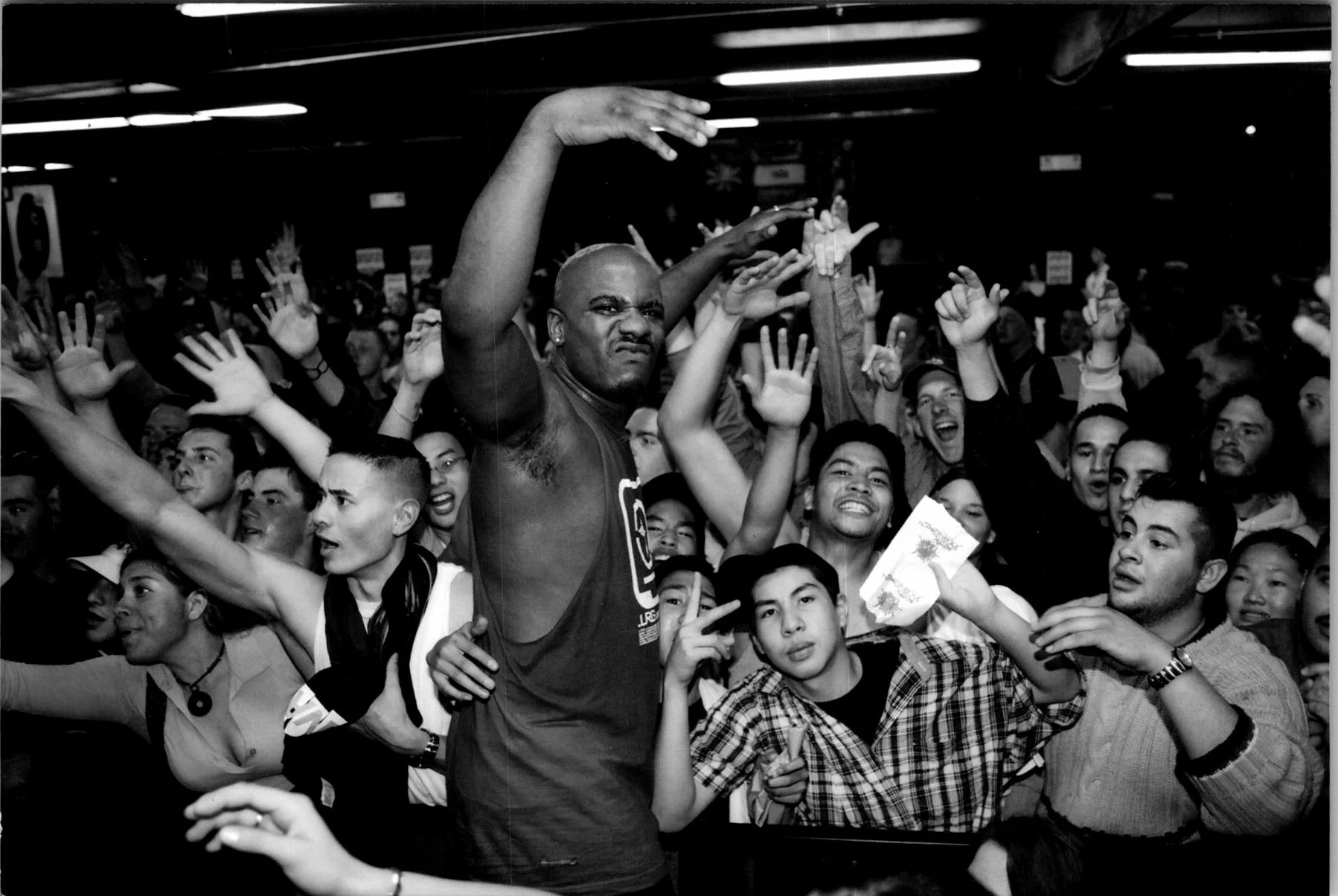
Sunspot Jonz reaches into the crowd during a Mystik Journeymen-era performance in the 2000s.
Courtesy of Sunspot Jonz
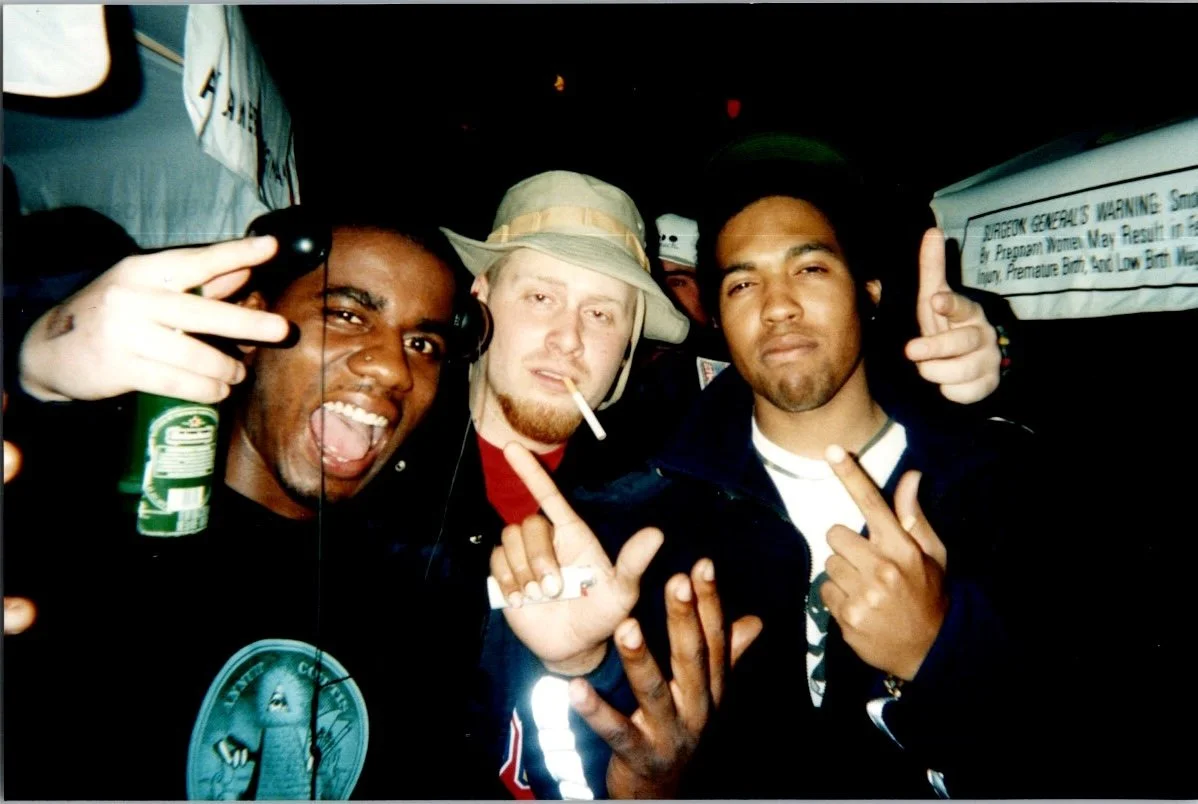
Sunspot Jonz with El-P and Aesop during the collective’s independent touring era.
Courtesy of Sunspots Jonz
For Jonz, legitimacy came through repeated work and community response. A record label or concert were possible structures which he never allowed to limit his paths to expression.
These ideas are valuable on a campus where students can feel they need a formal title, competitive application or existing organization before beginning. Jonz’s history suggests that creators should not mistake institutional permission for creative capacity, especially in the cultural and artistic hubs of Oakland and Berkeley.
Today, Jonz works in music, filmmaking, animation and children’s publishing. Through his Braveheart Books banner, he wrote “The Dentist and the Fire Breathing Dragon,” which became part of the foundation for Hip Hop Fairyland. The free event returned to Oakland’s Children’s Fairyland recently on Aug. 22, combining hip-hop, dance, beat-making, art and reading with dental screenings and health-resource enrollment.
The apparent distance between cassette hustling and a children’s health fair is smaller than it looks. Both begin by asking who has been left outside an existing system. Both answer with an alternative designed to be welcoming, culturally specific and alive.
Jonz does not speak about this expansion as a pivot away from art. “People say, ‘Oh, you’re always working.’ I call it breathing,” he said. “These things help me breathe, so I can get deeper and deeper and create more and more.”
The most useful inheritance of Telegraph is therefore not nostalgia for disappeared record stores or a supposedly purer era. It is a practice. Speak to people directly. Document your own community. Make a stage when the available one excludes you. Treat the audience as possible collaborators and enjoy the humanity in conversations with individuals.
Jordan believes Jonz’s organizing could eventually operate on an even larger civic scale. “I can see that guy in City Hall,” he said, imagining Jonz applying the same skills to children’s programs and community policy. What makes that possibility credible, Jordan argued, is sincerity: Jonz is not selling an empty dream but inviting people to make something useful “for the community or for hip-hop or for the kids.”
“Everything that I create is a different part of my soul,” Jonz said, “and a different understanding of how I process life — but as well, how you can process your life through imagination.”
For Berkeley’s next generation of writers, musicians and filmmakers, that proposition carries both freedom and responsibility. Nobody has to authorize the first page, session or gathering. But if independence is going to mean anything, it must become larger than one person’s ambition. It must make room.
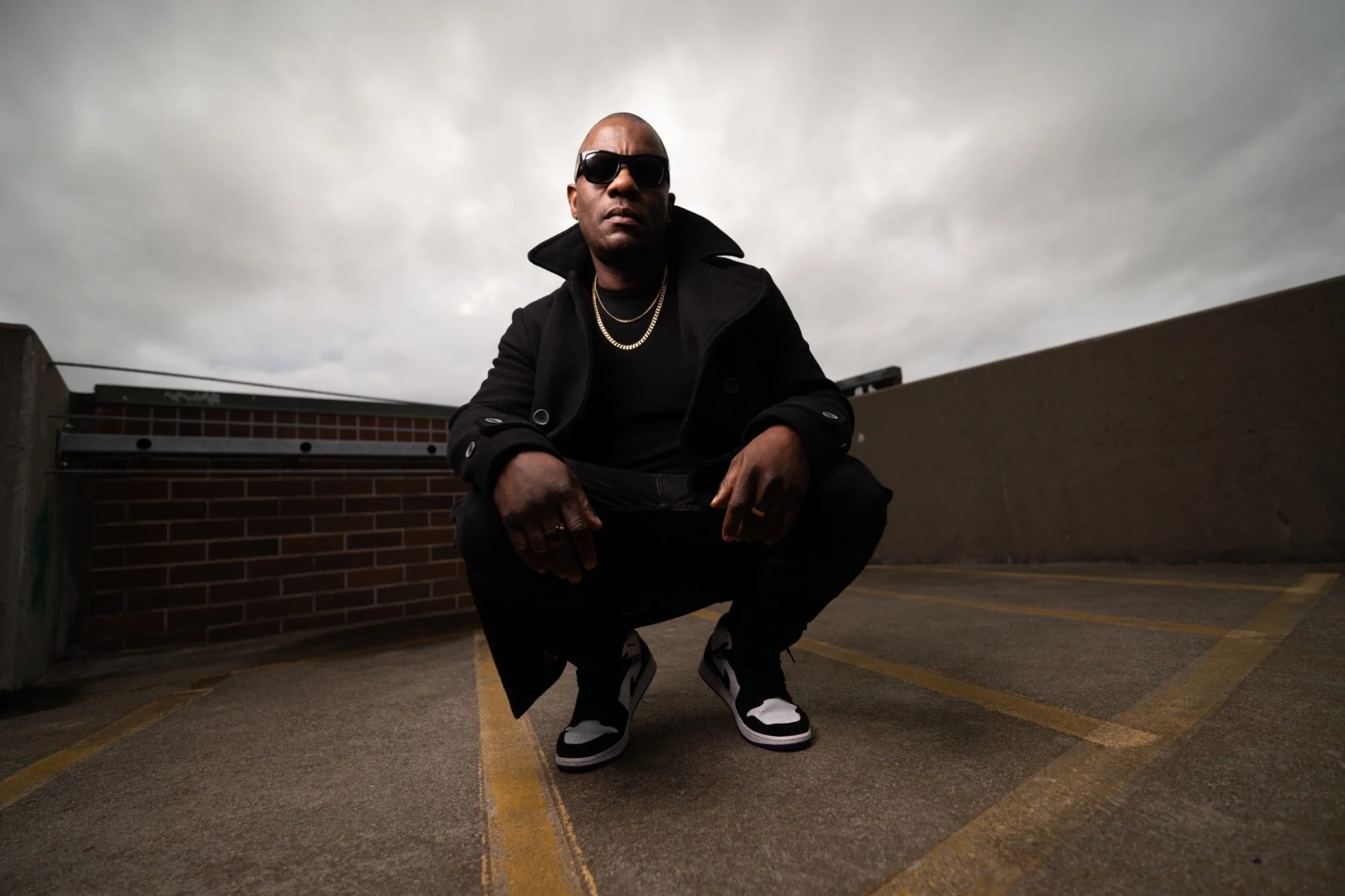
Sunspot Jonz in a current portrait, continuing the work of turning imagination into durable independent structures.
Courtesy of Sunpot Jonz