
Young Voices: Student Becomes the Teacher
This past Friday, The Berkeley Pulse got in touch with our child side. Pulse leadership curated our first K-12 creative expression workshop at Stiles Hall, lifting up the voices of Berkeley’s youth through improv, poetry and rap. After a busy week at the top public institution, a dozen UC Berkeley students volunteered to facilitate the workshop, showing up in a big way to support the youth. The youth taught us a lot.
The Pulse collaborated with Berkeley Community Educators Network (BCEN), a nonprofit connecting college students with K-12 youth and community organizations across the Bay Area to help communities develop a stronger network of support. This partnership falls in line with the Pulse’s commitment to represent voices that may otherwise go unheard. BCEN believes every young person deserves a space to express themselves in their own creative way.
The event was facilitated by Infinite Chi, an educator with 15 years experience teaching elementary school, and a genuine joy to see in his element. Chi shifted gears about 5 years ago when he started getting into rap and community organizing. He created his own experimental rap show, “Check Da Rhyme,” which provides a space for rap artists to share their passions through rhymes. While this project has allowed Chi to branch out, his roots in education are still strong.
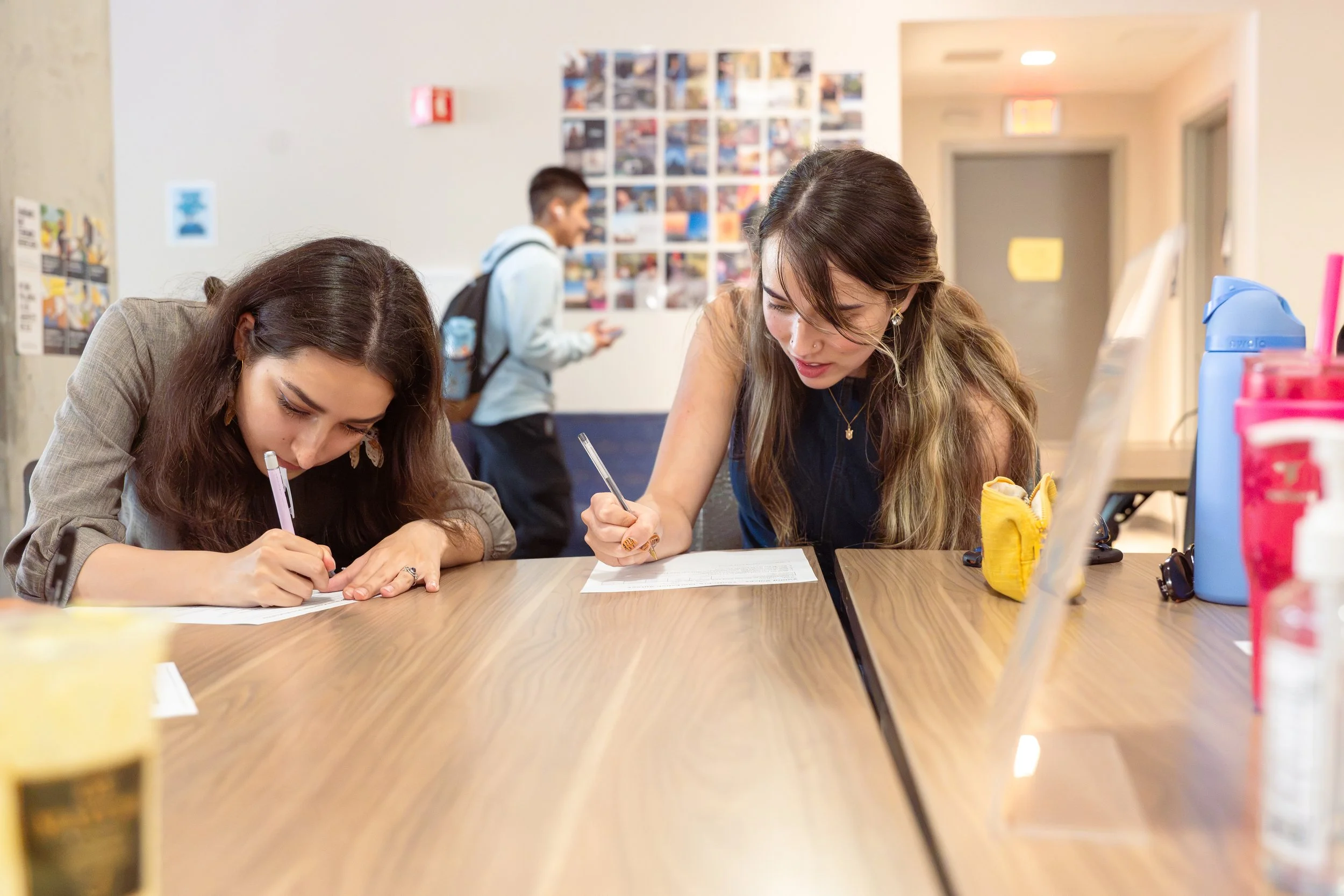
UC Berkeley students volunteer at Stiles Hall.
Photo by Mark North @marknorth.creative
The turnout was much smaller than expected, with a 4:1 ratio of college students to youth participants. The small numbers were not a letdown, but rather an opportunity to curate a creative family space. The team did some impromptu reorganization of the initial workshop format to include everyone in the room – even the parents joined in on the shenanigans.
The participants included two middle-schoolers, one elementary-schooler, a one-year-old sibling, their parents and the Pulse’s multi-media team dog, Pickle. Pickle is a good girl. Yes she is.
Chi opened with a lecture about the flow state. He was able to bring this lofty concept to a level that kids could understand, while still keeping the adults in the room entertained and educated. Chi explained the SRFR model of flow: Struggle, Release, Flow, Recover. He used a river as a metaphor for our minds. Over time, judgements, societal expectations and negative self-talk add twigs and logs to the river of our minds, inhibiting our ability to flow freely.
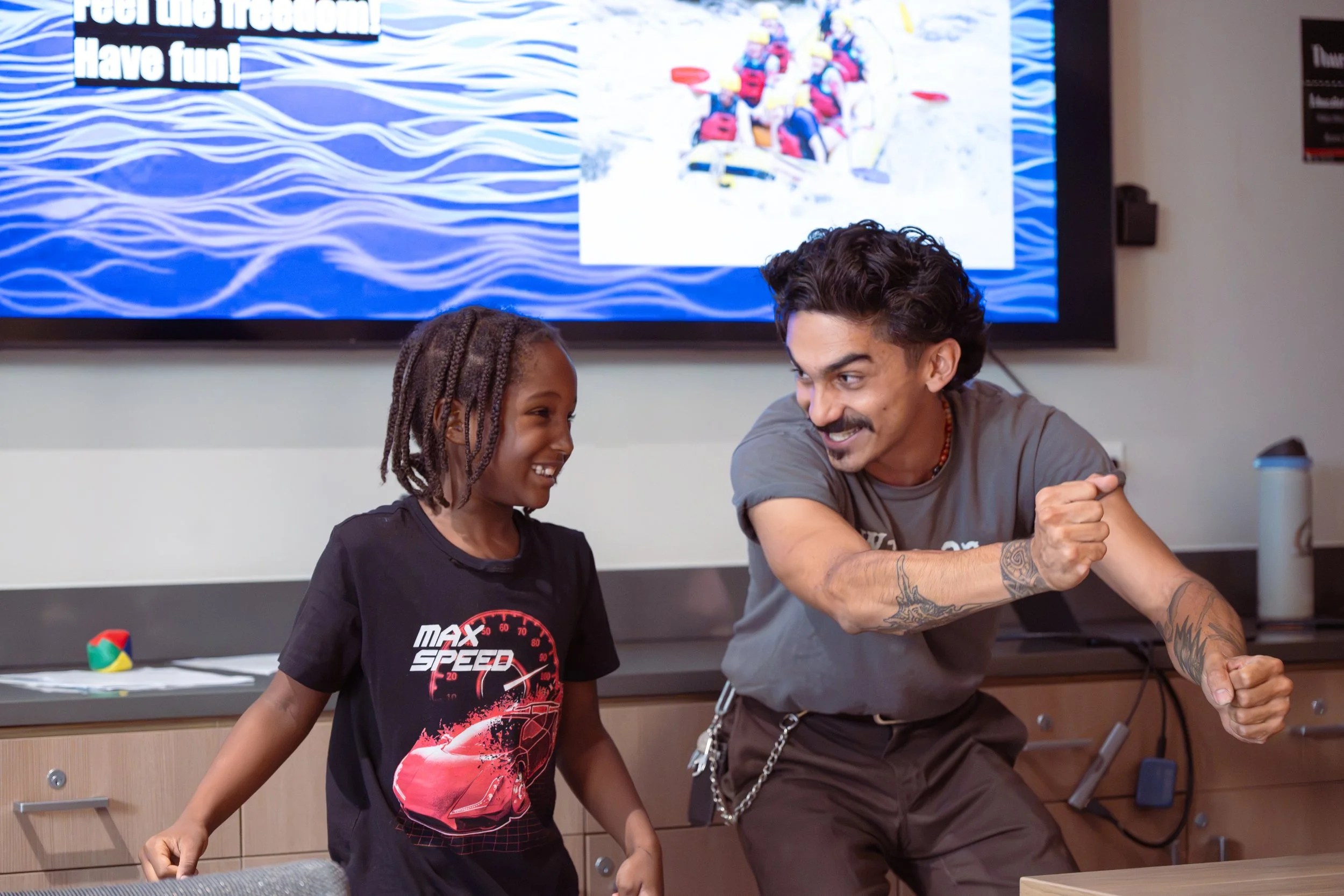
Quick thinking in the Taxi Cab.
Photo by Mark North @marknorth.creative
In order to overcome the struggle, Chi implores us to let it go, loosen up a bit. Go for a walk, laugh, dance, breathe and just try it! Why not? The group loosened up by playing a few improv games. We passed zips, zaps, zops and soundballs to each other across the room. Goofy exercises like these help people be less afraid to look silly. More silliness came when we played “Taxi Cab,” a game where everybody on the stage copies the quirks of the next passenger. Our brave volunteer was six-year-old, Zacari, who stepped up without hesitation. This game got college students using their childlike imagination to interact with the youth in a new creative way.
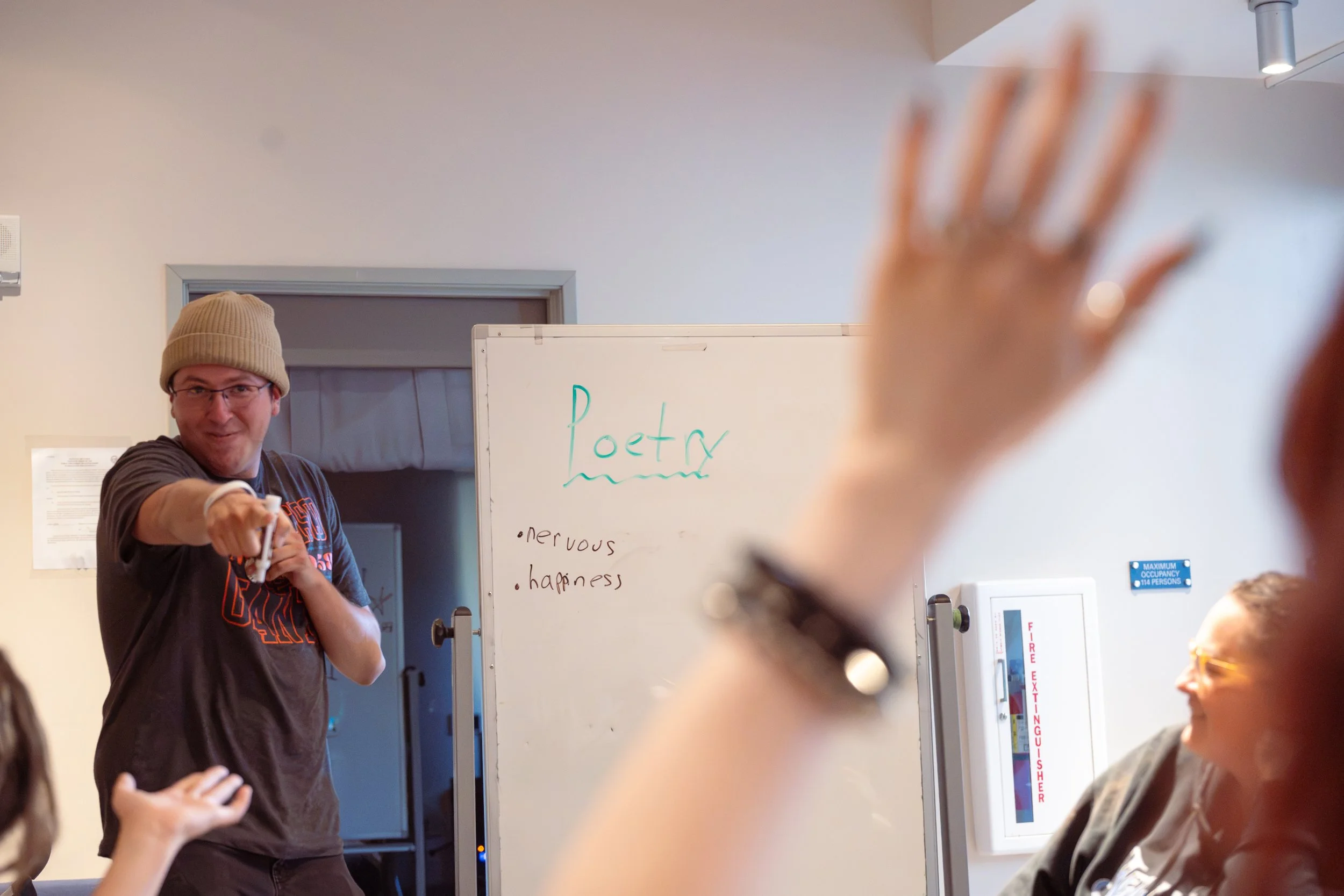
What emotions have you felt today?
Photo by Mark North @marknorth.creative
The poetry portion was led by Pulse founder, Morgan Garcia, but driven by the thoughts and emotions of the kids. Garcia focused on poetry as a tool to express emotions and interact with the world in a different way. To reflect this type of poetry, he started by asking the kids for one emotion they felt that day and something interesting they saw. Some emotions included “happy,” “nervous” and “frustrated.” Things included “rolling chairs,” “people juggling” and “flowers.” The kids then came up to turn these loose words into lines of poetry. It was an interesting poem.
Chi finished the workshop segment with free style rap. This was where the flow state took place. MC Chi lit up the room with some classic boom bap hip hop beats, and the words came whizzing. He made something so difficult seem so attainable to everybody in the room. We worked our way up to full free style flows by counting “one-two-three-rhyme,” “one-two-three-time,” “one-two-three-slime,” etc. Everybody won the rap battle at the Young Voices workshop.
When it was time to wrap up the rap section, Chi asked young participants to come up and share their experiences. Six-year-old, Zacari, expressed that he was nervous when he was on the bus on his way over, but he got over that as soon as he got to Stiles Hall, where he realized he was “the best!” Eleven-year-old, Zahra, took this opportunity to plug her new self-published book.
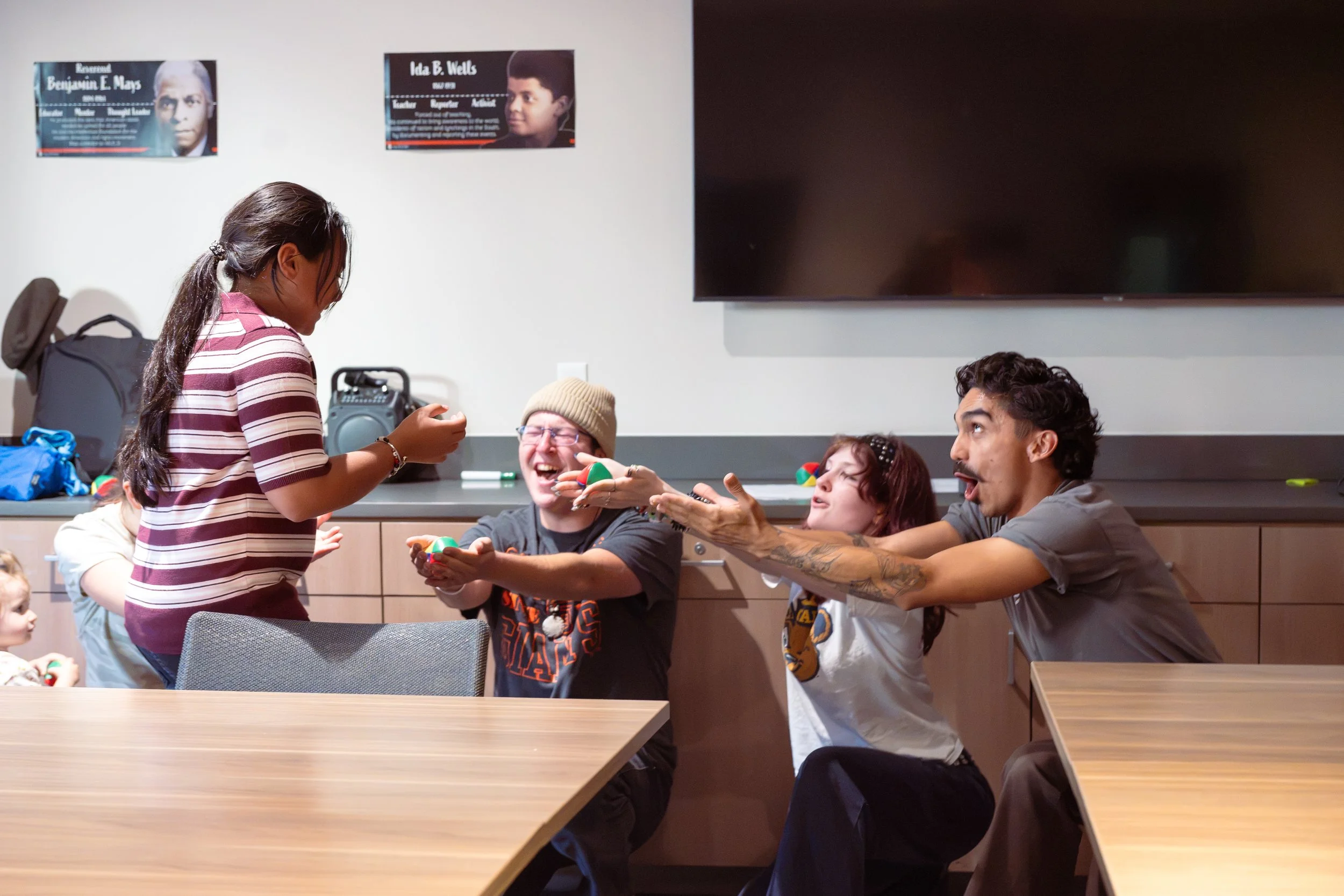
Future famous writer in the house.
Photo by Mark North @marknorth.creative
Another layer unfolded when UC Berkeley student, Margarita Fedorova, made note that participating in the “Taxi Cab” game was not something she thought she would have done, but she was inspired by the Young Voices in the room. The value of this experience was then made clear. There is an incredible synergy created when college students interact with kids. Older students can teach younger students, that’s a given. What we witnessed that afternoon was younger students teaching older students to be okay with expressing themselves in new ways.
Being a student at the top public institution in the nation can be overwhelming. Our devices are constantly distracting us, rarely allowing our brain to fully engage with the imagination. Years of societal expectation and fears of judgement inhibit us from trying new things and failing. To those same older students who were present at the workshop, the bright and open eyes of the younger ones felt like fresh air. Not only were we proud to foster the youth’s creative expression, but the Pulse’s Young Voices workshop showed us college students the importance of acting like a kid from time to time.
The Pulse extends our gratitude to Stiles Hall for opening up their doors, and allowing these community driven organizations a space to come together to support future leaders. We would also like to thank all the parents who allowed us the privilege to learn from their kids – and, of course, the volunteers, who got to take a walk on the child side.
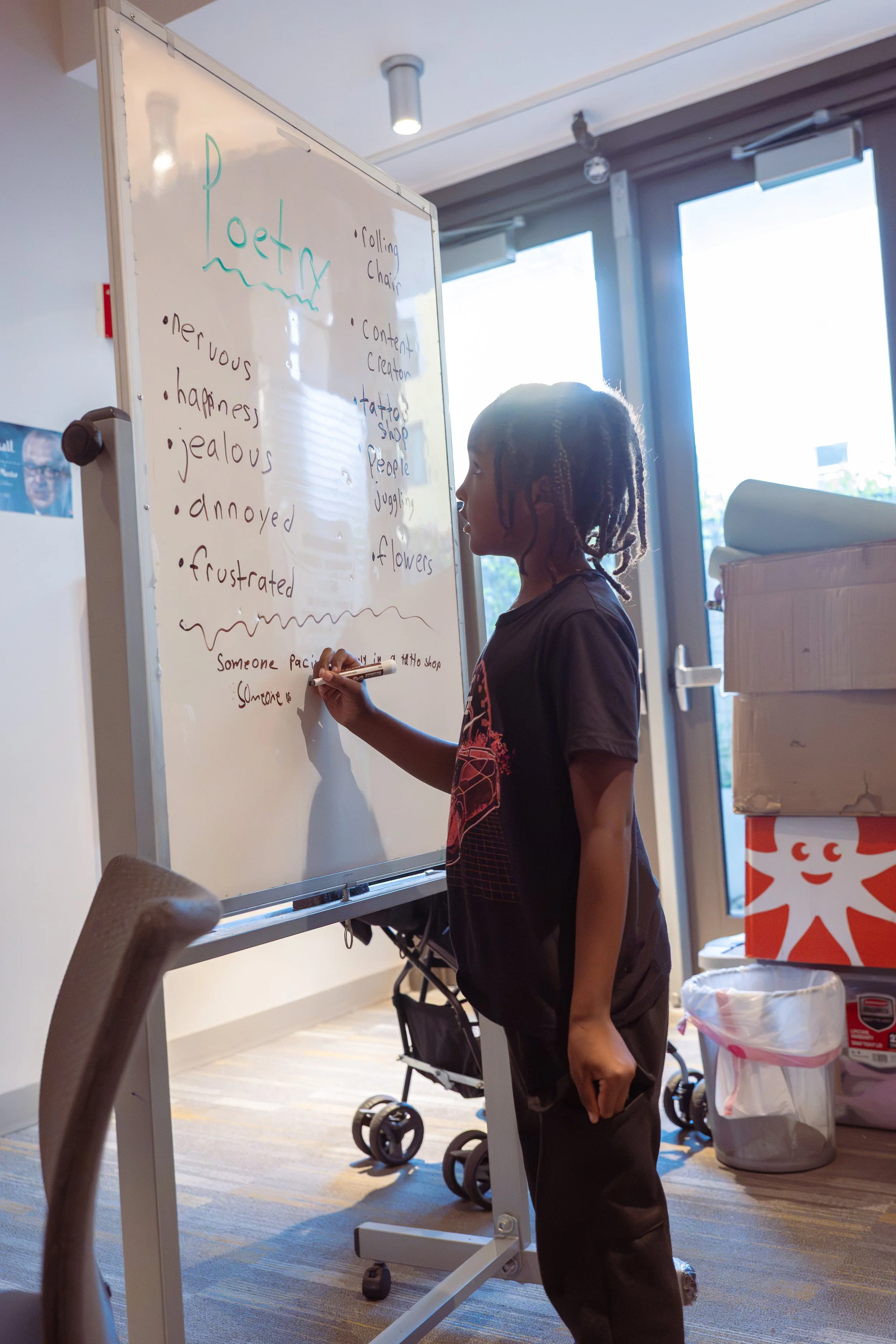
Tomorrow’s poets looking forward!
Photo by Mark North @marknorth.creative