On Cigarette Culture in Berkeley
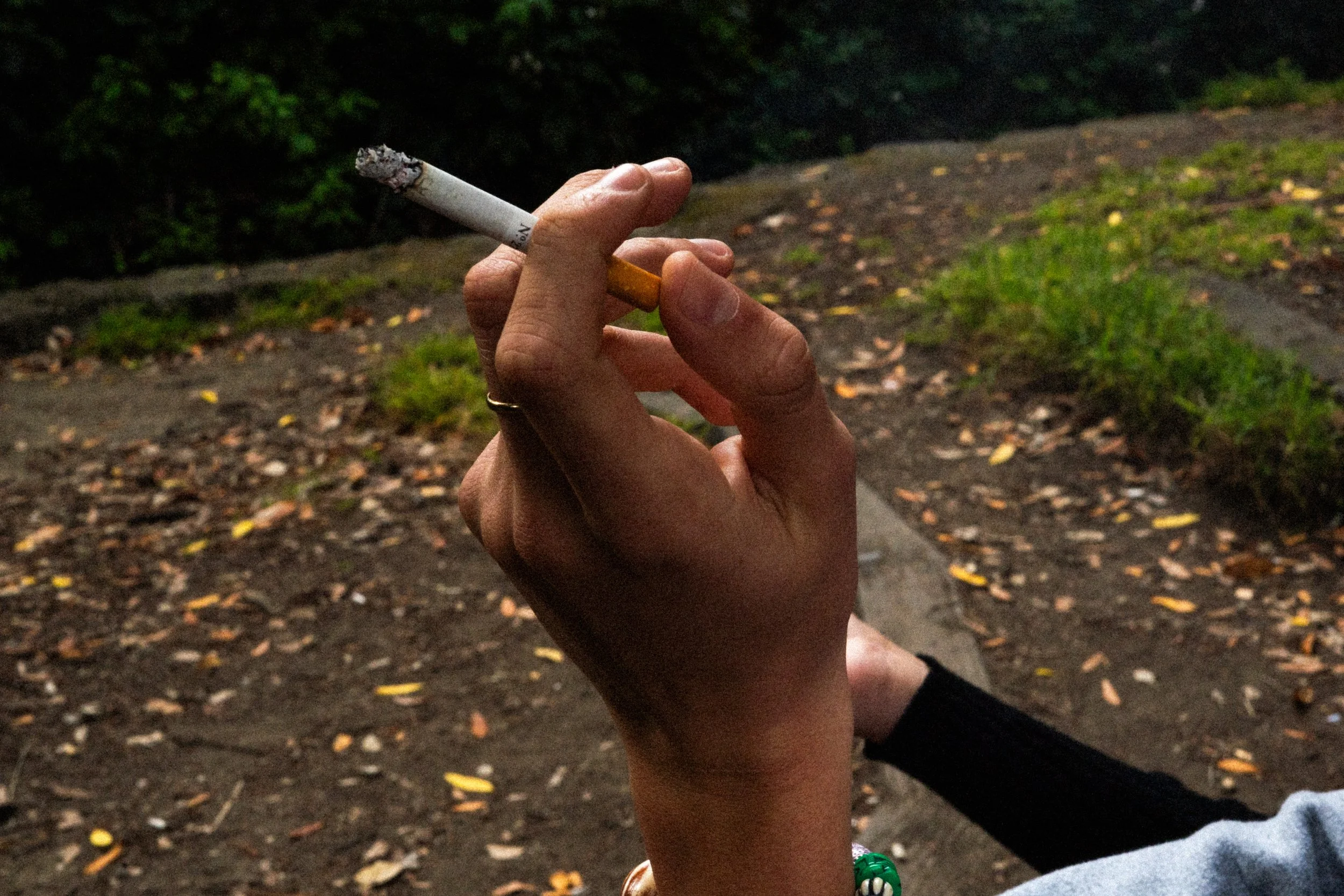
Photos by Noah Mendieta
Do you smoke?
No, not cigarettes. I made that choice a long time ago in elementary school watching a blackened lung being pumped with air. The anti-tobacco campaign that visited our school claimed it was a real smoker’s lung, but looking back I wonder if they were just exaggerating for the effect. Whatever it was, it worked. Every time I think of a cigarette, I see the dead smoker’s lung sitting on a table slowly inflating, desperately pulling in a sparse amount of air.
Upon arriving in Berkeley, I realized not everyone had this experience. Or at least they weren’t as traumatized as me. The cigarette culture here made me feel as if the nationwide campaigns to suppress tobacco use had neglected an entire city. Coming from Orange County, a county filled with beauty addicts, this was the biggest culture shock. Smoking was an ostracized act, one secluded to designated areas and looked down upon in public spaces.
From this upbringing, I was under the impression that everyone shared this aversion to cigarettes. It felt like the obvious answer for me to avoid them. What could it possibly provide? Aesthetics seemed too superficial to risk my health to such a degree. Why risk lung cancer for a brief rush I’ll soon become addicted to? What’s the use?
To clarify, this article is not a lecture, but an exploration. Smoking has been on the decline since the late 60s. Anti-tobacco campaigns seem to be one of the most effective health campaigns we’ve seen in our country. What then, causes a progressive city like Berkeley to have a resurgence of smoking? And of all things, why are its students one of the largest statistics?
Like all foreign things, exposure helped me understand this crisis. Though, the term crisis might be too critical. Exposure helped me understand this culture.
Though “no smoking” signs are posted everywhere, outside my dorm resides a space unspokenly designated for it. Cigarettes or weed, students or staff, the corner of our building welcomes all. The security camera above watches rituals recur with a blind eye.
Here, I learned what it was like to be amongst smokers. In between studying or partying, I’d escape with friends to the staircase and watch them fill the air with smoke. I refused their cigarette the first few times and was never asked again. We sat and chatted about things entirely peripheral to the action of smoking. Unlike alcohol or weed, the effects on their conversation seemed almost entirely aesthetic.
Inhale and listen. Nod your head and breathe out. Then, respond.
This was a space to think, to slow down for ten minutes, to pause in between sentences. That pace is a relief I could understand. With a world so full of material conversation and instant gratification, having this ritual to slow down makes sense.
When it comes to smoking alone, I obviously can’t say from experience what it means. Initially, it seemed to me like a depressive act. A brooding, sentimental routine that looked cool and smelled terrible.
Getting to know more smokers showed me another side. It seemed to me, once again, that smoking was a habit used to slow oneself down. Hardly do I see a lone smoker scrolling on their phone or preoccupying themselves with another task. They either stay at rest or take a stroll through the streets. If it weren’t so cancerous, I’d call it beautiful.
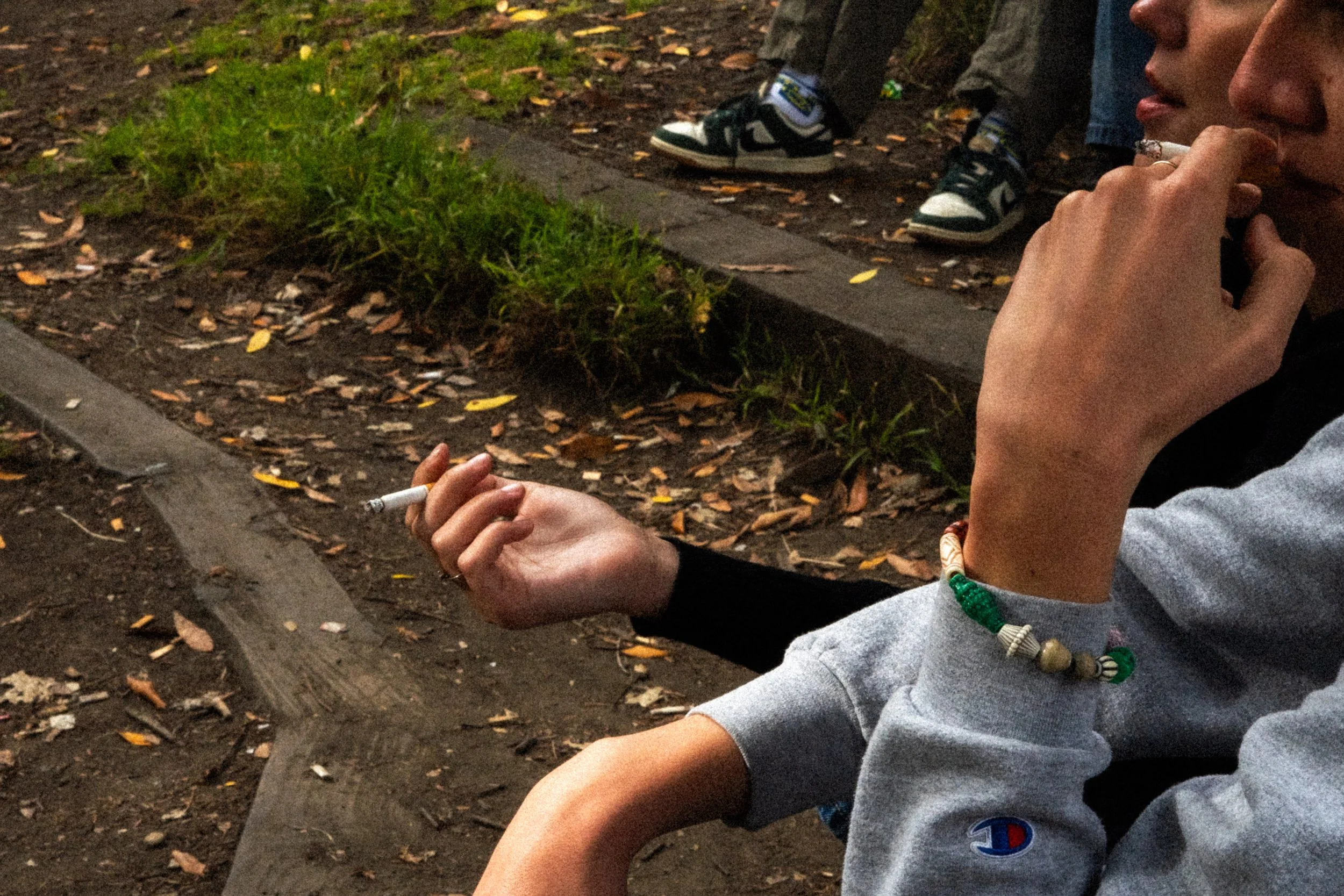
As students at Berkeley, we're mostly adults who can make our own decisions. That being said, I do worry. To risk an early death in exchange for some momentary relief says more about our upbringing than anything else.
Gen Z: the “unserious generation”. The name is frighteningly fitting. As we learned about the mistakes of past generations, we watched them repeat themselves in real time. The prospect of the American dream has been disillusioned by the greed of the elite, the apathy of nationalism, the two sided coin of our so-called democracy.
The veil that attempts to hide these evils from our generation is a thin one. At the same time, our ability (or perceived ability) to stop them feels futile. It's as if we're being forced to watch a lousy sitcom with a gun to our head. Forced to laugh, cry, or cheer at the right time, it makes sense that we treat our world unseriously. Though we must participate in the theatrics of it all, we recognize the absurdity.
On the topic of Berkeley, it makes sense that our smoking culture is thriving. As students invest more time into their knowledge of the world, they find more reason to view it as absurd. With that, fear evaporates in strange ways. Students stop viewing lung cancer as something to worry about, but something to expect. If cigarettes give them the power to feel humanity for ten minutes out of their day, the consequences don’t seem so awful.
Though it makes sense, I’d like to clarify, I won’t encourage it. Cigarettes shouldn’t be romanticized as more than a coping mechanism. They temporarily relieve the headache that is our reality with something more tangible. This is something I respect, but I will always support the choice to quit.
But this isn’t a lecture on cigarettes, it’s a lecture on our generation. The rise of cigarette culture isn’t some random trend; it’s a culmination of the horrors we witness daily. Walking through Sproul or scrolling on our phones, we witness humanity at its worst. It’s not our fault, but that doesn’t mean we should give in to apathy.
The unserious moniker is one that will not end well. In treating the world as absurd, we’ve begun to mistreat ourselves. We’ve become antisocial and apathetic. We find it difficult to place trust in others because we aren’t sure how serious we’ll be taken. An unserious generation can’t see their future, can’t feel empathy, and most importantly, can’t be human. If it takes a cigarette to experience a moment, we’ve lost something inherent to ourselves.
I’m not asking for a revolution (though we certainly need one), but a change in pace. It shouldn’t have to take a cigarette to slow down. Spend time with your loved ones, spend time with strangers, spend time with yourself. Our time here should never be taken unseriously. In taking our time seriously, our lungs have no need to be blackened.