Open Mic Comedy, Where the Room Matters More Than the Laugh
4 min read
BERKELEY, Calif — At around 9 p.m., a comic finished his set, stepped away from the stage set against a mismatched combination of furniture, and walked straight to the pool tables.
There was no swell of applause, nor awkward pause. Just the quiet continuation of the room. Someone scribbled in a notebook. Another person refreshed a laptop screen. In the comedy corner of BreakRoom in Berkeley, the night moved on without much ceremony.
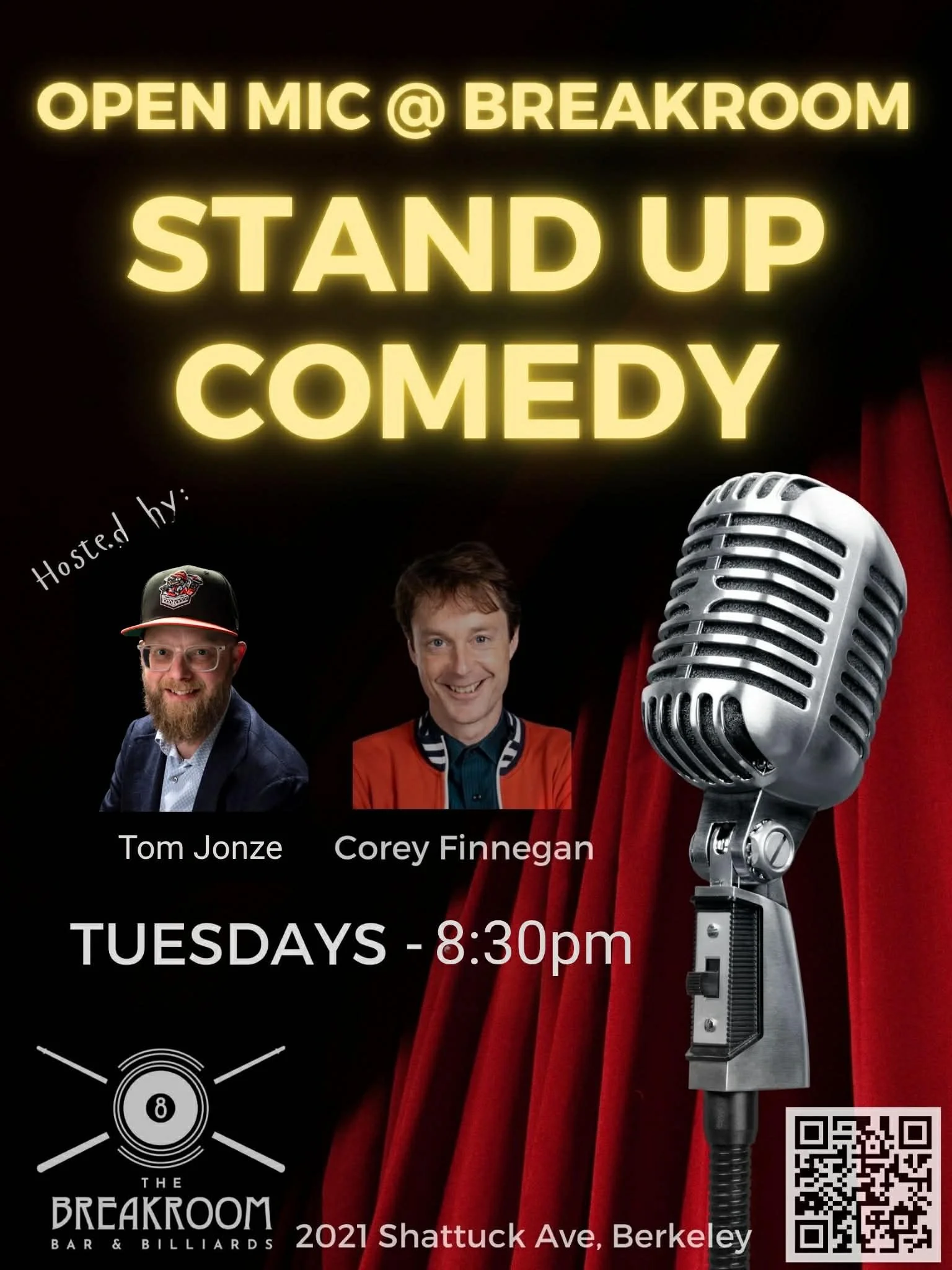
That understated rhythm defined the open mic. Held weekly at 2021 Shattuck Avenue, the BreakRoom isn’t a place where comedians arrive polished. It’s where they arrive unfinished and stay regardless of reception. About ten comics gathered near the microphone, with another handful spread across the bar, most of them already familiar with one another. A few non-comedians watched from the edges, but this was largely a room of peers.
Tom Jonze, the night’s organizer and host, kept things moving with minimal flourish. He introduced each performer, tracked the sign-in list, and filled gaps between sets when the energy dipped. Early in the night, he deadpanned, “Open mic comedy is where hopes go to die” — a line delivered with dry sarcasm and a hint of despair.
Later, Jonze explained that running the mic was never about control. “Running a mic was a way to hold myself accountable so I wouldn’t quit,” he said. Showing up week after week — even on the quietest nights — became a commitment to the craft.
This accountability is personal for Jonze. He said he quit comedy multiple times in the past while struggling with alcoholism, often losing momentum after nights that blurred into blackout. “I’ve quit comedy five or six times,” he said. But he always came back to it. Rather than describing comedy as rescue, Jonze framed it as structure — a reason to return, week after week, regardless of the variability of audience reception.
Jonze’s commitment is tied to the nature of comedy as an art form. Unlike music or writing, stand-up can’t be refined in isolation. “You can’t practice comedy alone,” Jonze said. “The only way we know if something is funny is by telling it in front of people.” Jonze described the room as an instrument that fortifies his creative expression.
Because of that, failure is inevitable. Comics talk openly about bombing, using language that’s dramatic. However, this dire dialogue wasn't for theater but rather a brutal form of transparency. “We call it dying,” Jonze said. “You have to embrace the bomb.” As performers embrace this classification of failure as instruction, their purpose at BreakRoom is collective improvement.
This ethos shapes the room, where performers test pacing, tone, and vulnerability in real time. Some glance down at notebooks to regroup. Others push through silence with energy alone. The laughs come unevenly, but attention remains — quiet, patient, and informed by shared experience.
One comedian attending BreakRoom for the first time put it plainly: “Open mics are good because you have the opportunity to fail.” There’s no promise of validation here. Jonze has, instead, fostered an environment for comedians to hold themselves to the same accountability that freed him from the limitations of addiction.
That space matters in Berkeley, where creative work often intersects with community life. The BreakRoom open mic was created as a cultural commons where people can practice and refine their craft in solidarity; all while acknowledging an inevitable truth: it’s not always easy or glamorous.
On this night, there were only three non-comedians in the audience, including myself. With much of the student population away for winter break, the room reflected a quieter cross-section of the city — where comics show up for each other without the promise of a glamorous reception. Whereas audiences can spend their way into comedy clubs, featuring comedians that headline national tours, BreakRoom offers an environment that serves as a testing ground for consistent craft and relaxed revision. After their sets, many performers returned to the pool tables, rejoining a quiet crowd of peers.
Pulse Takeaway
The BreakRoom open mic isn’t about winning the room as much as remaining in discomfort and enjoying the highs of an environment where things may not always go your way. In a small corner of Berkeley, comedians treat failure as part of the craft and community as the infrastructure that makes art possible. This quiet commitment is what keeps creative spaces alive — and why they endure.