Project Reboot
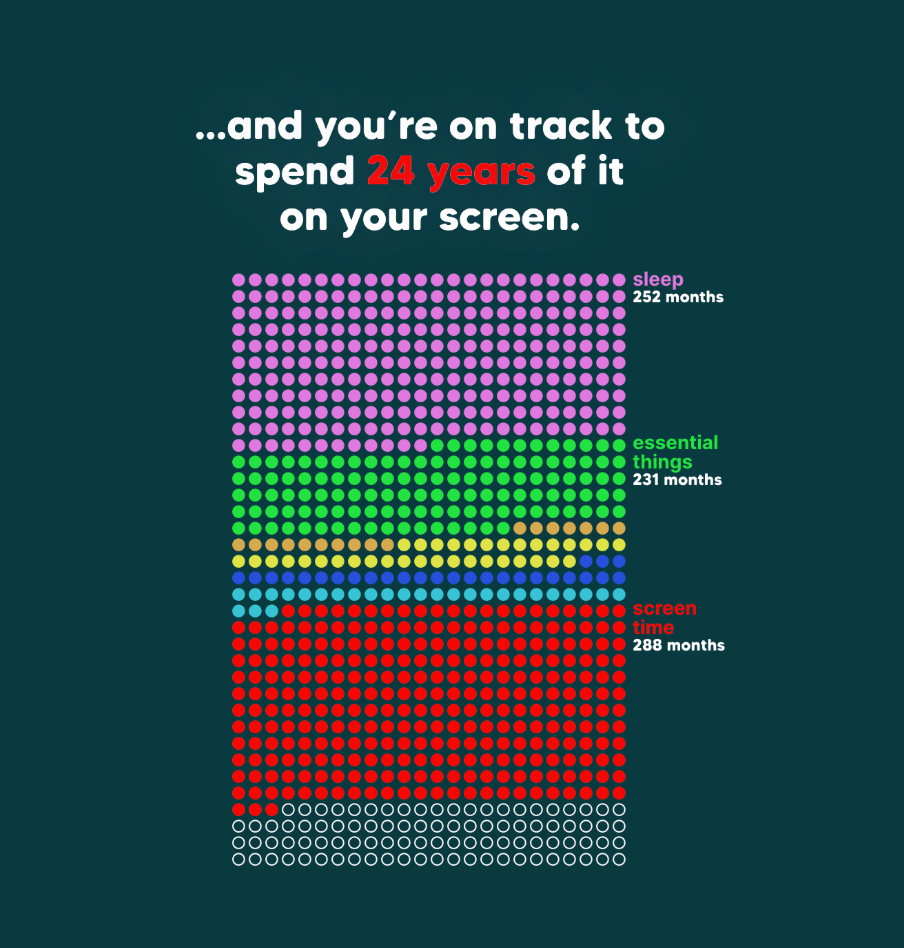
These numbers represent an 18 year old who sleeps an average of 7 hours per night and spends an average of 8 hours per day on their phone (national average). Take the quiz here.
What device are you using to read this article? Chances are, it’s your phone–and it doesn’t stop there. Our daily tasks, activities, and forms of entertainment often center around the phone in our pockets.
This technology assists us with carrying out the necessary functions of our daily lives. Certainly there could be no harm in that, right?
From ordering groceries on a retailer’s app, to navigating the East Bay via our phones’ GPS, we use our phones for virtually everything (pun intended). We check our bank accounts, organize our schedules, keep in contact with loved ones, all with the tap of our screen. It appears that the ability to utilize technology in many ways is beneficial for us.
However, within the virtual realm of these devices we can fall into a vortex of distraction, pacification, and overall purposeless functions. A serious issue arises from this dynamic, and it is rooted not in technology itself, but how we use it.
In recent years we have learned that the dependencies to our phones can negatively impact our psychological health. A general response that appears to take precedence in the conversation around phone addiction insists on our abstinence from technology altogether–but is this the correct approach?
This is where Project Reboot comes into play.
Project Reboot is a student-led organization that aims to address our dependence on technology. Founded by Berkeley Energy Engineering alum, Dino Ambrosi, Project Reboot focuses on teaching the younger generations how to build healthier habits with technology, and regain what we’ve been silently losing to screens: connection, reflection, and intentional leisure.
Whereas the common narrative nowadays is that we should abstain from technology as a solution to its potentially negative effects, Project Reboot takes a much more inclusive approach. The narrative for Project Reboot is not “Stop using your devices.” Rather, it is more along the lines of “We need to be intentional with how we use our devices.”
This perspective enables us to have a realistic and healthy approach to how we can create better relationships with the technology we use.
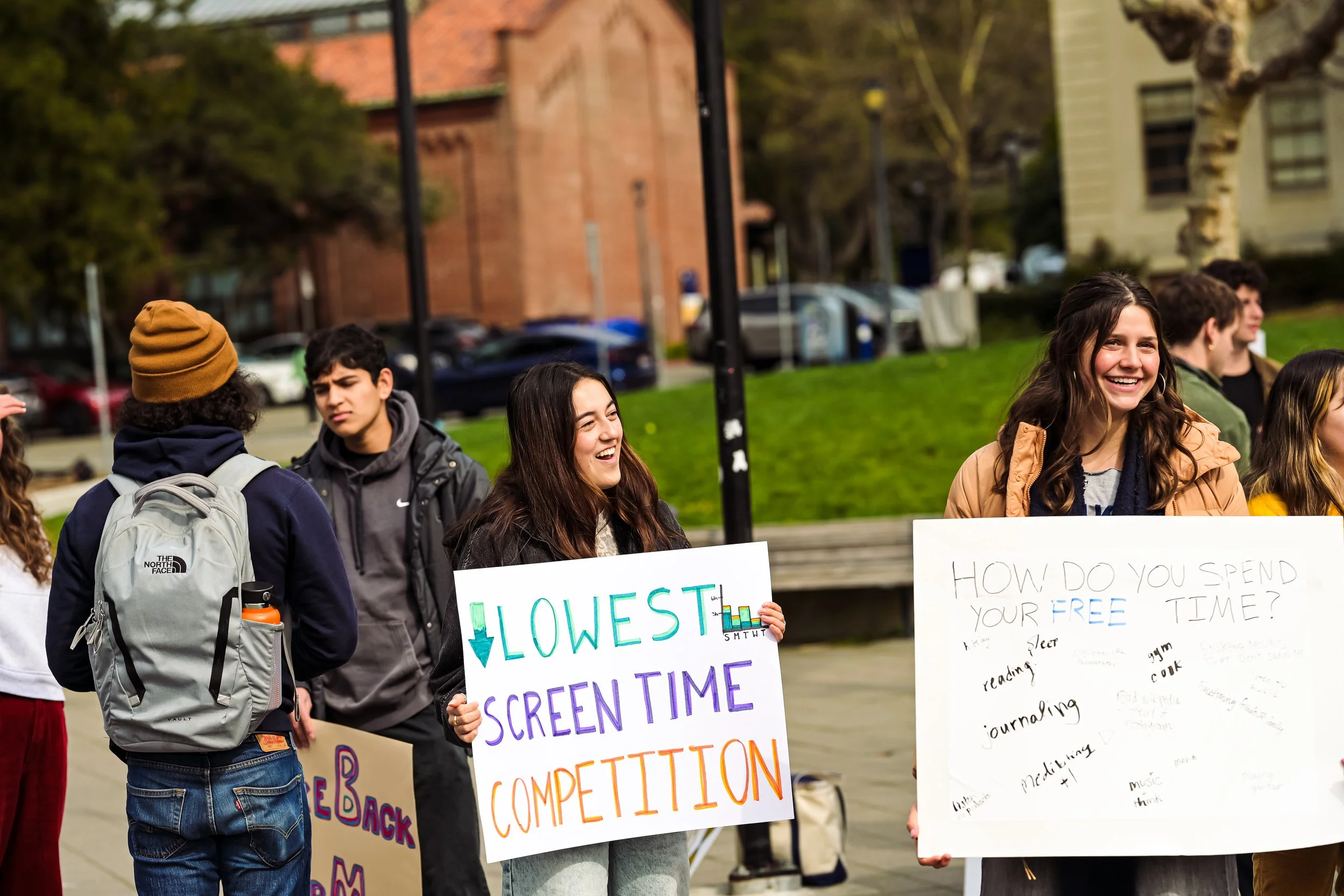
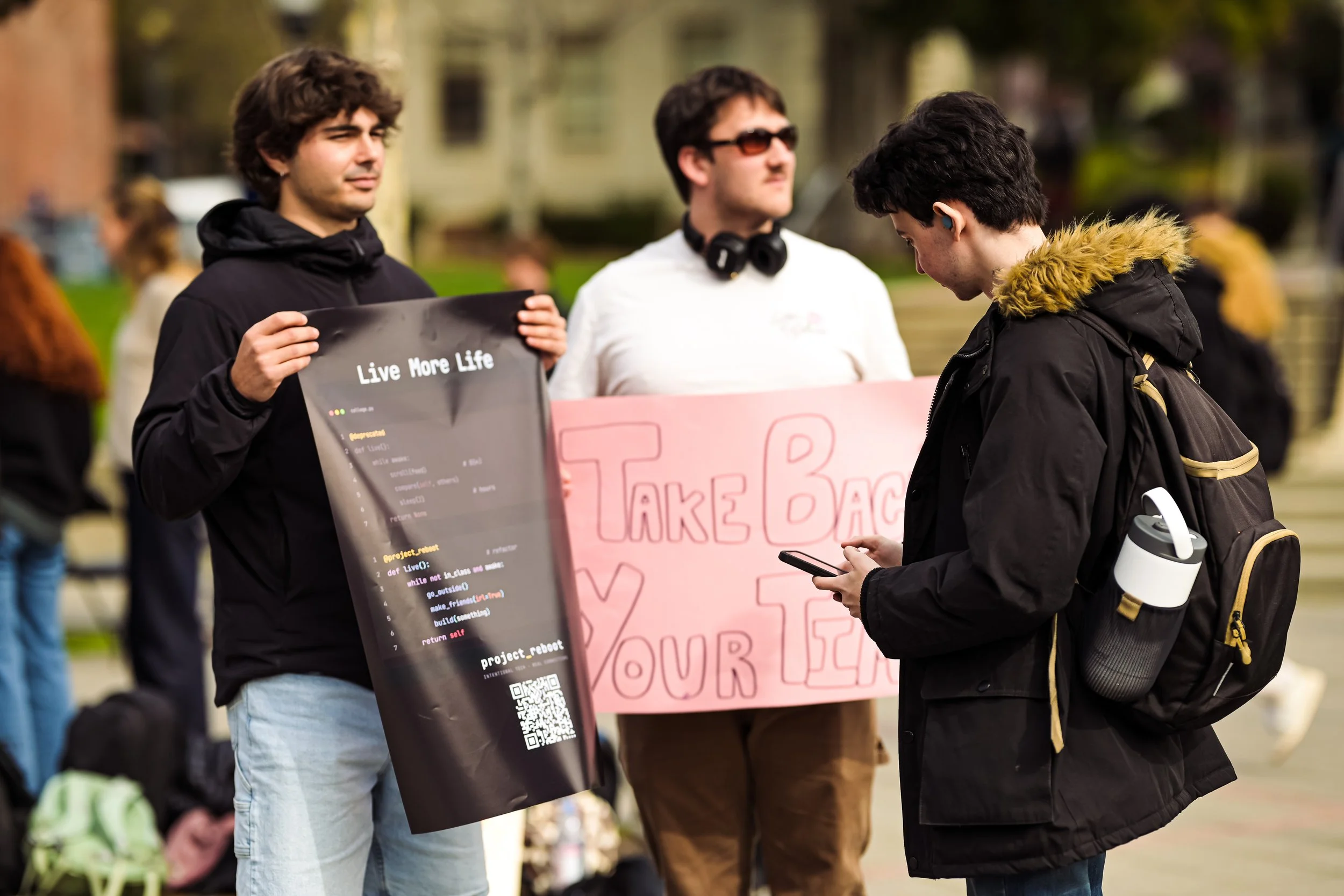
Project Reboot can often be found every Friday afternoon actively informing passersby in front of Sproul Hall on UC Berkeley’s campus, helping people to take the pledge.
I had the opportunity to speak with Project Reboot members Arnav, a Data Science and Cognitive Science major, as well as Evening, a Cognitive Science major. They explained that the Project Reboot team aims to educate tech users rather than dictate.
A piece of wisdom that was given to me about my tech use was this: When it comes to technology, just use it. Don’t abuse it. I was also informed about the massive amount of funding that goes into designing such technology in order to make it addictive–it’s by the billions of dollars.
The tricky thing about using our devices is that we can quickly fall into a pattern of overt stimulation. Moreover, the temptation is difficult to resist when the same device we use to improve our lives also houses the very things that can pose a detriment to it. It reminds me of the countless times I’ve used my phone to check my emails, then fell into a rabbit hole of Instagram reels and YouTube shorts.
In my own effort to improve my relationship with technology I decided to take the pledge. I set limits on my screen time and made the conscious decision to use my devices with intentionality instead of impulse.
If you’d also like to join the movement to build a better relationship with your device that’s curated to you, you can start by taking the pledge here.