
Cali Joy Is Building a Circle Around Oakland’s Creative Memory
7 min read
OAKLAND, Calif — Cali Joy thinks in constellations.
One artist leads to a DJ. One DJ leads to an organizer. One organizer leads to a food program, a muralist, a parent, an elder, a youth event, a camera, a flyer, a stage. In Cali’s world, nobody is simplified to their profession. A rapper can also be a storyteller. A dentist can also be a community worker. A mother can also be an artist. A show, therefore, can also be a way of keeping memory alive.
That is how she talks about Sunspot Jonz and Friends, the June 27 hip-hop event presented through Cali Joy Productions and centered on Sunspot Jonz, the Bay Area artist and Living Legends co-founder. The night brought together artists and community members from across Oakland’s creative ecosystem.
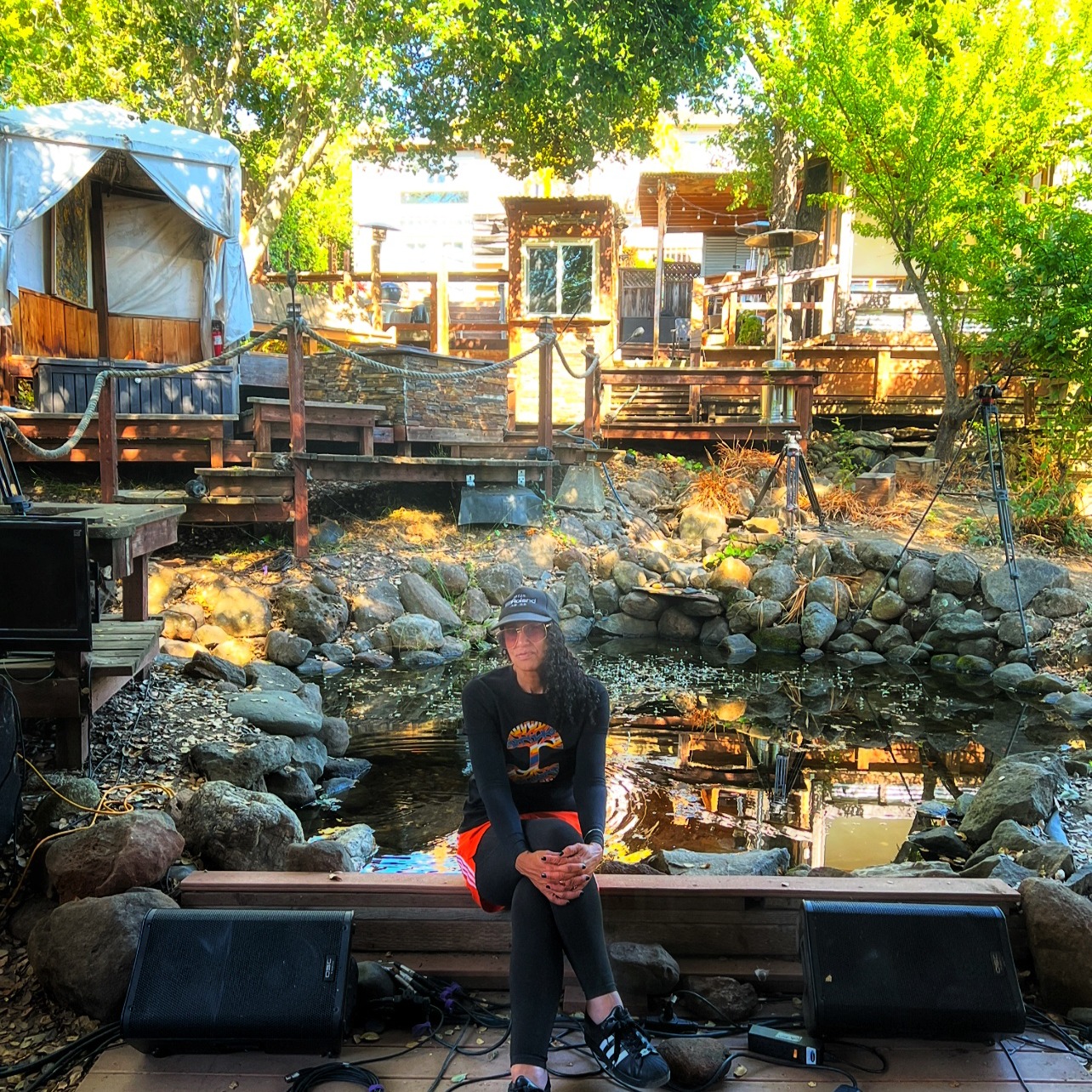
Photo courtesy of Cali Joy
Cali made her goal clear: to highlight the relationships between music, activism, care and legacy that shape her community.
“I’m just trying to plug it all together,” she said.
The show took place at The Lama Shack, an intimate backyard venue in Oakland, California, where Cali has continued to build momentum around live music and community events.
“I believe in people, and I want to see them win,” she said.
That is the cleanest way to understand Cali’s work. She’s building a circle where respected Bay Area artists can be appreciated by connected with younger audiences who may not yet understand their impact.
At the center of the June 27 show was Sunspot Jonz. Around him was the wider world Cali is trying to hold together: Oakland artists, DJs, organizers and community workers whose lives move between music and service.
Cali Joy is the vice president of Oakland Communities United for Equity and Justice, an Oakland-rooted organization connected to the Self-Help Hunger Program. Self-Help Hunger Program’s public mission is “to build unity and self-determination through care programs that provide food, cultural nourishment and support to North Oakland & South Berkeley residents.”
The program was founded in 2009 by former Black Panther Auntie Frances Moore.
OCUEJ’s history helps explain why Cali’s work in music is inseparable from her work in the community. In her view, hip-hop is an art of gravitas, reaching people who might not walk into a meeting, lecture or organizing space. Music can bring elders, artists and younger people into the same room without turning the room into a lesson.
Sunspot Jonz sees that same instinct in Cali’s work. When I later asked him how the two became connected, he described her as someone committed to strengthening Oakland’s creative community.
“She’s a community activist and she’s trying to make stuff happen in the Bay, which I respect because the Bay needs a lot of help,” he said. “She’s got a good heart and is trying to make good stuff happen. There’s no choice but to be down with people that have a like mind and a strong heart for trying to help the community.”
“One way that I’ve always found that was beneficial to inspire a lot of these people, the youth today, is through hip-hop music,” Cali said. “That’s my connection.”
At The Lama Shack, connection was the theme as people gathered for Sunspot. Cali estimated that dozens of activists were in the audience. Some were visible, she said, and others were people who work quietly, “behind the scenes, making things happen.”
Her ability to bring together established artists and active community organizers mirrors Sunspot’s own career. Looking back on decades of organizing, he said he never originally thought of himself as someone building community.
“I thought I was just bringing artists together,” he told me. “Then I realized I was actually bringing the artists all together in the community.”
“Not only were they Sunspot’s best friends,” Cali said, “but they’re all about the movement.”
The Lama Shack fits the kind of scene Cali is drawn to. The venue describes itself as “an intimate Oakland space for music, creativity and community.” Cali calls it a place that can feel “a little bit like being in a movie.”
Cali said she and Mike Molda, a videographer and founder of Creative Minds, helped build momentum around the space over the last year. She described past nights with special lighting, lasers, artists arriving after other shows and crowds drawn in through street-level promotion. Her method is personal. She refuses to be another person mindlessly passing out flyers. Cali is looking for everyone’s story.
“When you tell this little story of magic and then you send them to the website to see some of that magic, it’s a no-brainer,” she said.
Sunspot Jonz was the center of the June 27 bill, but even he resists being understood through a single role. During our conversation, he spoke less about music than about imagination, community and creating spaces where people could safely express themselves. That broader vision is exactly what Cali wanted audiences to see. Sunspot’s real name is Corey Johnson, a Bay Area artist and co-founder of Living Legends, a crew of underground indie hip-hop artists from California.
Sunspot’s range has also moved beyond music. Oakland’s Cultural Strategist-in-Government program listed Corey Johnson among the cultural workers embedded in city departments and offices to bring arts-based thinking into civic work. His role in Oakland aligns with Cali’s view of Sunspot as someone who thinks about how culture can reach people across neighborhoods, ages and institutions.
Sunspot has also continued building work for younger audiences. Through The Suniverze, his creative world stretches into children’s storytelling and youth-centered imagination, including “The Dentist and the Fire-Breathing Dragon.”
He is also organizing Hip Hop Fairyland, an Oakland event on August 22 that brings hip-hop, art, education and community programming into Children’s Fairyland.
Cali was never trying to frame Sunspot as a legacy artist frozen in Bay Area hip-hop history. Instead she told me the story of movement: from underground rap to children’s books, from performance to civic culture, from the stage to spaces where young people can inherit the language of hip-hop as something playful, political and alive.
Cali wants that range to be recognized.
“Sunspot is creative in so many ways, and he really has intention when he’s doing something,” she said. “He’s a storyteller.”
“I need for everybody that’s important to know they’re important,” Cali said. “And he’s one of them.”
One person is rarely only one person. They might be a performer, a teacher, a parent, a painter, an activist, a producer, a health worker or a friend of somebody else who should be in the room. Cali’s gift is seeing those relationships as infrastructure.
“I’m just trying to plug it all together,” she said.
That openness is part of what drew Cali to Sunspot’s work in the first place. During our conversation, he described creative community in similarly expansive terms.
“Everybody’s invited to this community,” he said. “If you can take your mask off... that’s where we want to be.”
DJ Mike, who performed at the event, placed the night inside a longer hip-hop timeline. He said he got his first Technics in January 1992 and has watched hip-hop move through eras: mainstream, underground, major-label, independent.
“I watched hip-hop grow and change,” he said. “I’m happy and grateful to be part of it.”
Asked what separates artists from each other, he gave an answer that could apply to music, writing or student media.
“Do what comes out,” he said. “If it feels good, create.”
Lil Flower Nasty spoke about how parenting changed her writing. “I created a whole human being,” she said, laughing through a thought that carried more weight than the joke.
Jav the Dentist described Flossin’ for Smiles, a dental education project focused on prevention and community care. For him, artistry and dentistry aren’t two separate identities. Instead, he’s found ways to use what he has learned in service of other people.
“When you have other passions,” he said, “you could just use what you’ve got and your skills in one thing to be able to expand and give back to the community in other ways.”
That is the story underneath the show.
In Oakland, art is often connected to other kinds of labor. Sometimes it is a fundraiser. Sometimes it is a way to keep elders in the room. Sometimes it gives younger people a reason to listen. Sometimes it is the public face of work that has been happening in the shadows for years.
For Berkeley students, especially those of us trying to build student media with integrity, Cali’s work offers a challenge. It is easy for a campus publication to treat Oakland as nearby culture, a place to visit for music, color or credibility. It is harder, and more necessary, to approach Oakland as a creative community with its own history, labor and rules of respect.
Berkeley does not need to absorb Oakland’s culture. It needs to listen to it, document it carefully, credit it properly and build meaningful relationships outside of our campus.
Cali seemed to understand that possibility immediately.
“I think it’s really important that we reach some youth with some of these messages,” she said. “There’s a lot of ways that we can cross over.”
By the end of our conversation, Cali was still naming people. More artists. More organizers. More shows. More elders. More links in a chain she is building while she is still figuring out what the chain will become. She admitted that Cali Joy Productions is still emerging.
“I’m still inventing it,” she said.
“As we all build right now, we want a legacy,” Cali said. “We want someone else to carry on.”
For one night in Oakland, that legacy looked like a stage, a garden, a circle of artists and a woman moving through it all, making sure the right people were seen.
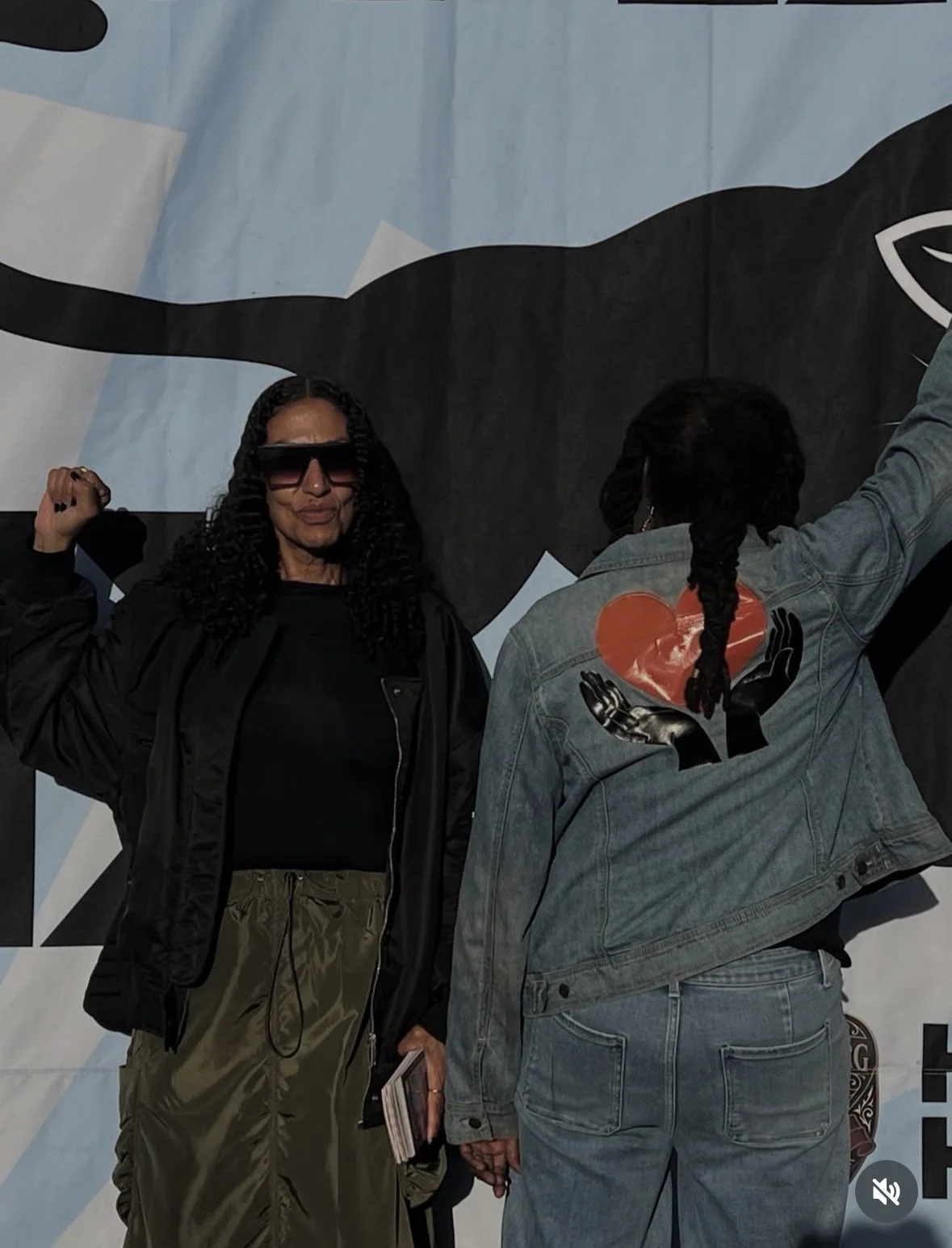
Photo courtesy of Cali Joy
Upcoming Event
Cali Joy will host “Beyond the Bars” through the Self-Help Hunger Program on Aug. 16 from 1–6 p.m. at Driver’s Plaza, located at 61st and Adeline streets in Oakland. Centered on the idea that every day is Black History, the event will focus on prison reform and community reentry.