The Park Is Still Here: A Lesson From the Hands Who Built It
5 min read
BERKELEY, Calif — This past May I was invited to a memorial service for a woman I never knew, and I’m so glad I went.
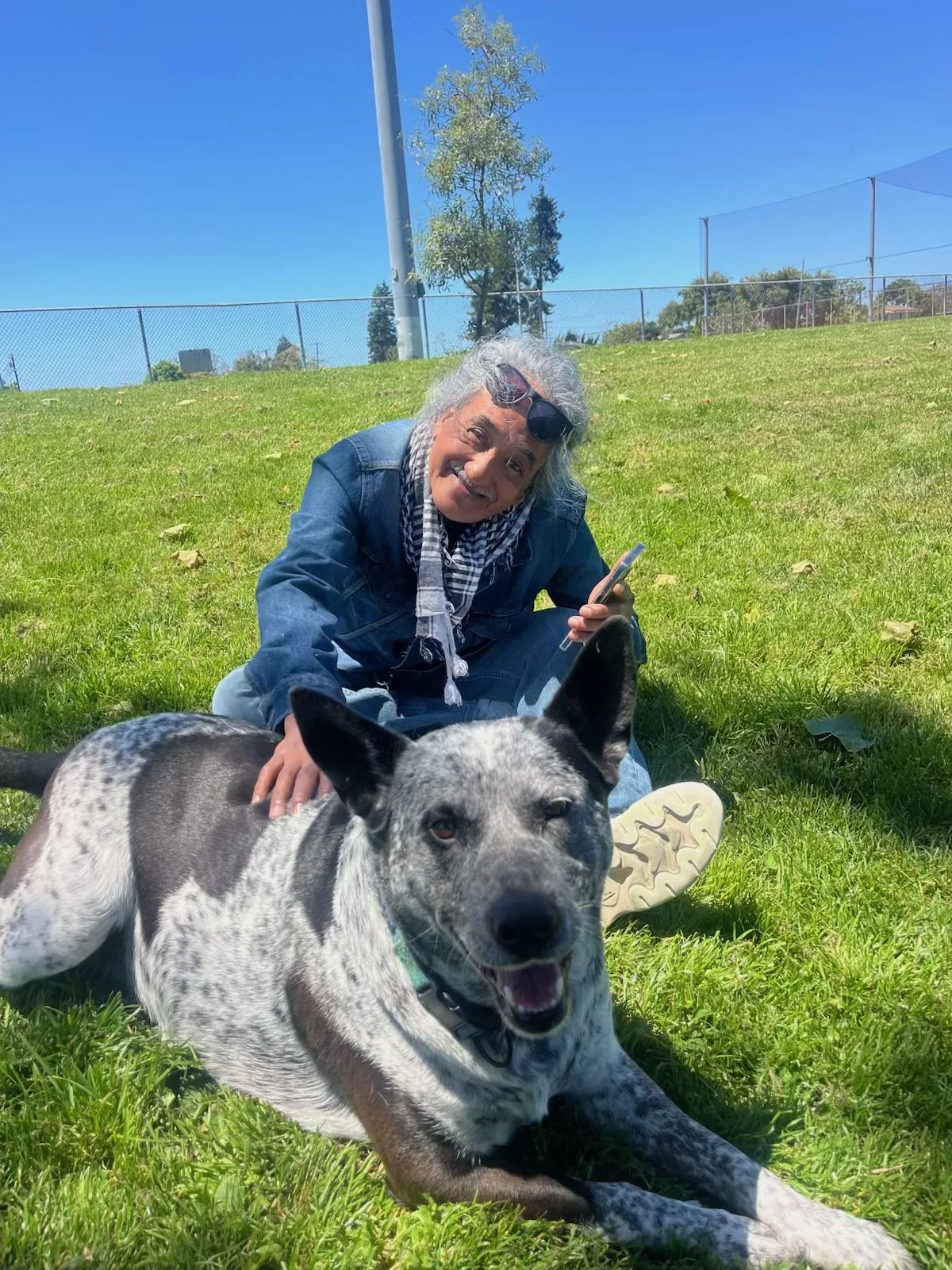
Erick and his dog, Bonita, at San Pablo Park
Earlier that week, I had met Erick Morales at San Pablo Park when I was magnetized by his larger-than-life dog. Erick was equipped in a jean jacket and a kufiya. He spoke with so much enthusiasm, he practically shined. He told me he got Bonita at People’s Park when she was just a puppy and that he was a muralist there for years.
I beamed.
I had just written an article for Street Spirit on Julia Vinograd’s poetic odes to People’s Park. I spent many late nights researching the park’s creation. I read countless poems about the park’s magic. And with a heavy heart, I read about the ultimate destruction of the land at the hands of the university from which I was about to graduate. I had a copy of my newspaper article in my car that I rushed to give him.
He matched my excitement tenfold. We talked about how Vinograd’s poems memorialized the park. As he sparked up a joint, he scrolled through his Facebook, passionately recounting stories of protests past, of other People’s Park figureheads he knew intimately, and of summoning the grit to clean the most disgusting bathroom imaginable because the people who lived at the park deserved clean facilities. He showed me pictures of his beautiful murals.
Lo and behold, I already had his artwork on a “Save People’s Park” T-shirt at home—a stolen recreation of his work that he was never compensated for.
He told me that weekend he would be celebrating a friend, Gianna Ranuzzi, who had recently passed. He invited me to come meet more OG People’s Park hippies from back in the day. I eagerly obliged.
That Sunday, I walked into Berkeley’s Veterans Memorial Building feeling a bit like an intruder. Erick was nowhere in sight. I knew no one — least of all the woman being honored.
I quietly took a seat in the back and listened as stories of Gianna soon vibrated in the air. I learned that she had cultivated the Berkeley World Music Festival, an annual event that ran for over 20 years, celebrating diverse cultural expressions through musical performance at People’s Park. I soon gathered that most of the memorial’s attendees were artists, writers, musicians, performers, and the like. They had been the heart of Berkeley for a long time.
Friends read poems and told tales of Gianna’s kindness; how she’d go to every cafe in Berkeley at closing hour, ask for the pastries they were going to throw away, and bring them to people at the park. Orlando, a former People’s Park resident, choked up recollecting how she had saved his life twice and always brewed the best teas.
We sang songs about kindness. We sang songs about loss. After everyone had spoken, a band congregated among fairy lights, congas, saxophones, drums and guitars.
Women in their 70s were dressed in vibrant skirts, draped in jewelry and color. I sat and watched them dance. When the band played “Fried Neck Bones and Some Home Fries,” one of my favorites by Willie Bobo, a pioneer of the boogaloo Latin jazz movement of the '60s, I got up and grooved. We draped each other in purple silks and built archways with our arms to dance through.
It didn’t matter that I was the youngest there by a handful of decades. I felt our dancing traversed time. I felt the spirit of People’s Park breathing to the beat.
Towards the end of the service, Gianna’s sister reminded the crowd of Gianna’s jewelry, which she had crafted and sold on Telegraph Ave. back in the day. She insisted we all take a couple of pairs of earrings to remember Gianna by. I let others flock to the jewelry first—those who knew her. Then, I gravitated towards a dangling pair of silver and pink beaded butterflies. I wore them to my graduation ceremony the following week.
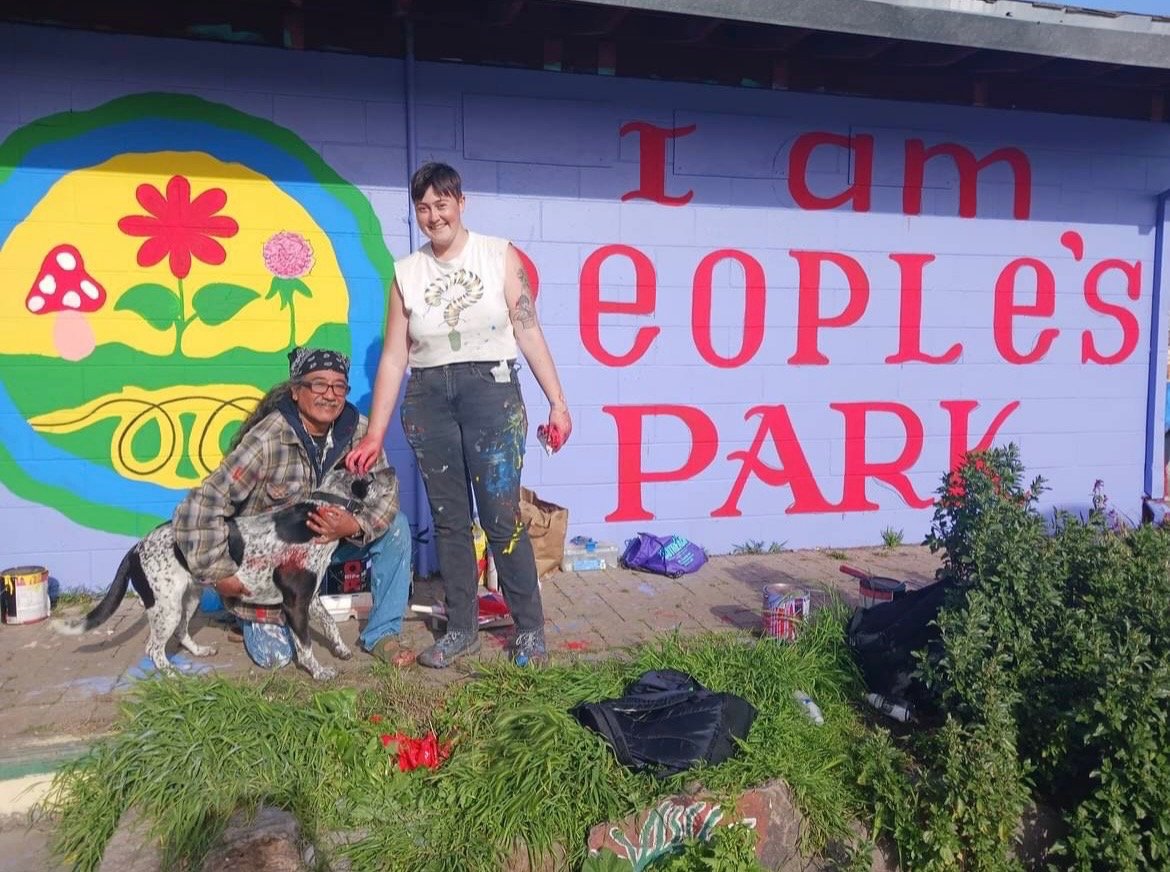
Erick, Bonita and UC Berkeley alum student, Riko
While I had never met her, Gianna had moved me. I wanted a symbol of her kindness to carry me across the stage. I wanted a token to remind me of all the people and all the magic that I discovered on the Berkeley streets.
When I met Erick, I said how sad it was that the park was gone and replaced by a gigantic, brooding apartment complex.
He shook his head, “No, mija. People's Park is not gone. It’s right here.” He held out his hands.
The People who built the park, painted the murals, cleaned the toilets, planted the trees, tore down the fences, played the instruments, wrote the poems – the hands that made People’s Park are here. And they are very much alive.
And when something or someone is no longer here, we find ways to memorialize their spirit. We find ways to bring them back. We do these communal rituals as humans—like singing, dancing, poetry, and music—to express the things that go beyond words, that go beyond land ownership, that go beyond the physical. And we do them together.